Quick Answer: Is There a Dress Code in Kanyakumari Temple?
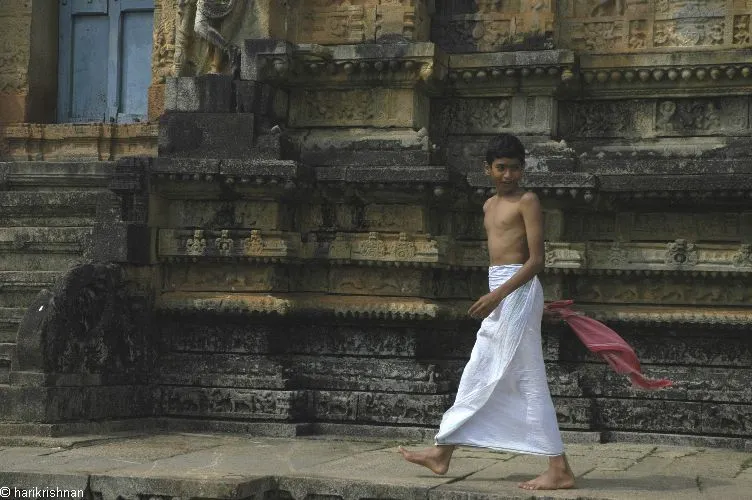
Yes. At the Kumari Amman (Bhagavathy Amman) temple and the other old temples of Kanyakumari district, men remove their shirt and vest and wear a dhoti (veshti) or full-length trousers, never shorts. Women wear a saree, salwar kameez or churidar with a dupatta, or a long skirt. Sree Padmanabhaswamy Temple in Thiruvananthapuram is stricter still: mundu only for men, saree or set-mundu for women.
"Can I go into Suchindram in shorts and a T-shirt?" is one of the questions travellers ask most on the way down to the cape. The short answer is no. The longer answer depends on which temple, because Kanyakumari district sits on the old border of Tamil and Kerala customs, and the rules shift a little from shrine to shrine. This guide goes temple by temple across a typical day trip. For darshan hours and the history of the cape temple, see our Kanyakumari temple timings guide; this page is only about what to wear and carry.
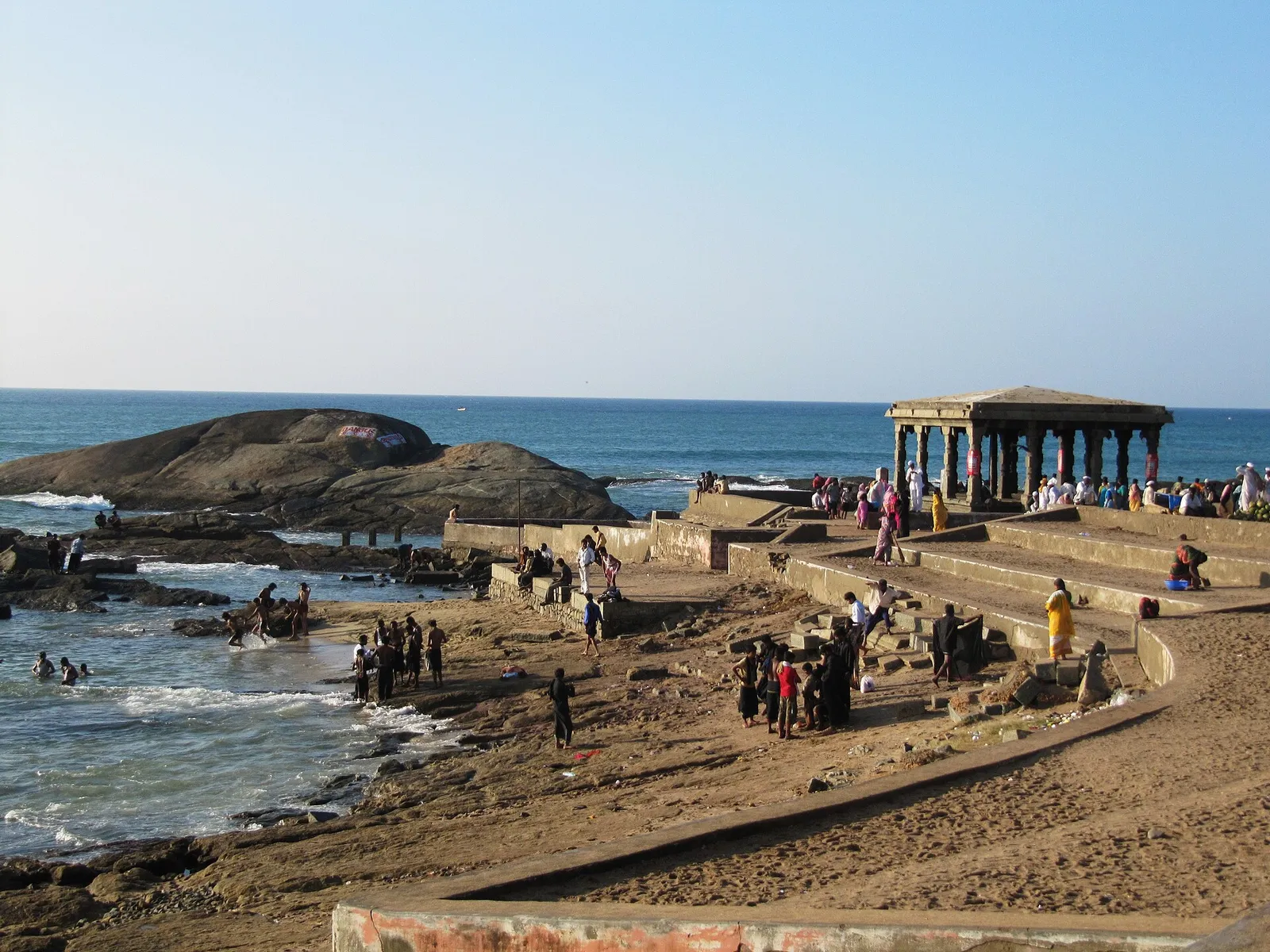
Why the Kanyakumari Temple Dress Code Is Stricter Than Most
Until 1956, Kanyakumari district was part of the Travancore kingdom, and its great temples were run on Kerala lines. When the district joined Tamil Nadu, about 490 of these Travancore temples passed to the Kanyakumari Devaswom Board, which today works under Tamil Nadu's Hindu Religious and Charitable Endowments (HR&CE) Department. The customs came with them. The most visible one is that men go bare-chested inside, as they do in Guruvayur or Padmanabhaswamy, which surprises visitors from Chennai or North India, where shirts are normal in temples.
There is no single written state law on temple dress. A Madras High Court order of 2015 tried to impose one across Tamil Nadu, but a division bench set it aside in 2016. What applies instead is the Tamil Nadu Temple Entry Authorization Act of 1947, which lets each temple insist on dress that is "customary" there. In practice, that means the rules are enforced at the gate by temple staff, and they vary a little from day to day. Treat everything below as the safe standard, not a guarantee.
Kanyakumari Temple Dress Code: Temple-by-Temple Table
A quick reference for the temples most travellers combine in one or two days:
| Temple | Men | Women | Dhoti nearby? | Footwear & phones |
|---|---|---|---|---|
| Kumari Amman (Bhagavathy Amman), Kanyakumari | Shirt and vest off. Dhoti best; full trousers usually accepted. No shorts or lungi. | Saree, salwar or churidar with dupatta, long skirt. No shorts or sleeveless tops. | Yes, small shops on the approach sell cheap veshtis | Shoe stand at the gate. No photography inside; deposit phones. |
| Suchindram Thanumalayan | Shirt and vest off. Dhoti or veshti preferred; no shorts. | Saree, salwar or churidar with dupatta. | Usually, at shops near the temple | Shoe stand. Phones only if switched off; no photos (HR&CE rule, Oct 2026). |
| Nagaraja Temple, Nagercoil | Shirt off for the inner courtyards. Dhoti or trousers. | Saree, salwar or churidar. | Yes, central Nagercoil textile shops | Shoe stand. No photography near the sanctum. |
| Mandaikadu Bhagavathi Amman | Traditional dress; be ready to remove your shirt. | Saree or salwar kameez. | Limited; bring your own | Shoe stand. Avoid photography inside. |
| Thiruvattar Adikesava Perumal | Kerala custom: shirt off, mundu or dhoti preferred. | Saree, salwar or churidar. | Limited; bring your own | Shoe stand. No photography inside. |
| Sree Padmanabhaswamy, Thiruvananthapuram | Mundu or dhoti only, bare chest. No trousers unless covered by a mundu. | Saree, set-mundu, long skirt and blouse, or half-saree. Churidar only with a mundu over it, and not always. | Yes, rented and sold at the entrance | Cloakroom for phones, bags and cameras. Hindus only. |
Kumari Amman Temple Dress Code (Devi Kanyakumari / Bhagavathy Amman)
The Kumari Amman temple at the cape, also called the Bhagavathy Amman or Devi Kanyakumari temple, is the one most visitors see first, often straight off an overnight train. It is run by the HR&CE Department and follows the district custom firmly.
For men
- Shirt, T-shirt and vest come off before you enter. You can carry them, or drape a thin towel or angavastram (shoulder cloth) over one shoulder.
- Lower wear: a dhoti or veshti is ideal. Most visitor reports say full-length trousers and jeans are accepted as long as the chest is bare. Shorts, three-quarter pants and Bermudas are turned away, and several visitors report that a lungi is not accepted either.
- Leave belts, wallets and leather items with your shoes or in the car if you can; leather is considered unsuitable inside many South Indian temples.
Kanyakumari temple dress code for women (and for ladies travelling in groups)
- Accepted: saree, half-saree, salwar kameez or churidar with a dupatta, or a long skirt with a blouse.
- Likely to be stopped: shorts, short skirts, sleeveless or low-cut tops, and tight western wear. Leggings under a long kurta are generally fine; leggings with a short top are not.
- No head covering is needed. Girls can wear any full-length dress or frock.
There are small shops along the approach to the temple that sell plain white veshtis and towels cheaply, so a man who arrives unprepared can usually sort it out in five minutes. There is nowhere to buy a saree in a hurry, so women should plan ahead. Timings, festival days and the temple's legend are in our Kumari Amman temple timings page.
Suchindram Temple Dress Code
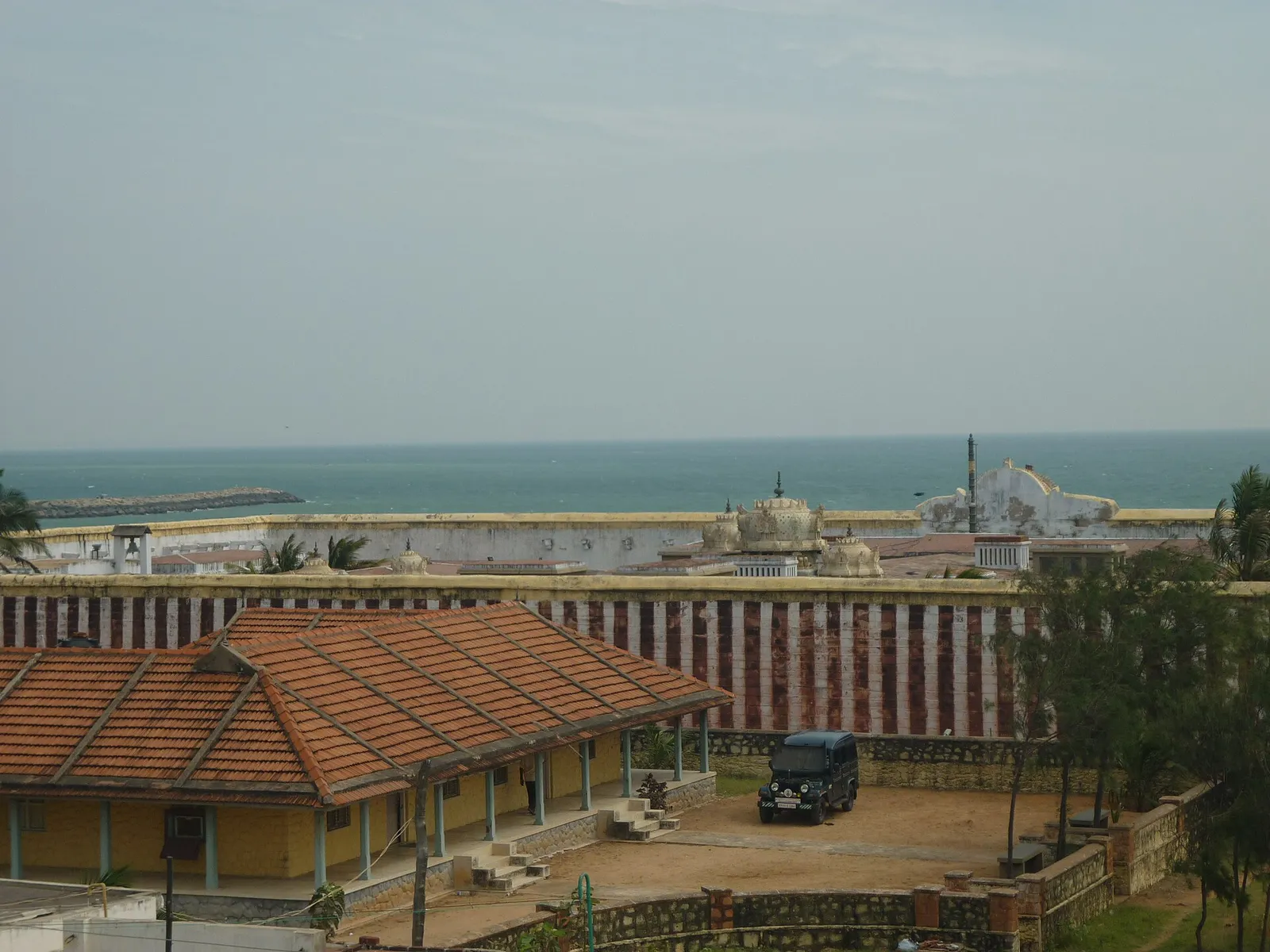
Suchindram Thanumalayan, 13 km up the road towards Nagercoil, keeps the same custom as Kumari Amman: men bare-chested, with a dhoti or veshti preferred and shorts refused, and women in a saree, salwar kameez or churidar with a dupatta. The temple is open roughly 4:30 AM to 11:30 AM and 5:00 PM to 8:30 PM.
The big change in 2026 is phones. Following a Madras High Court direction of December 2022, the HR&CE Department banned camera phones inside 52 major temples from 1 September 2026, with ₹5 deposit counters at the gates. After weeks of queues and complaints the rule was relaxed in October 2026: you may now carry your phone inside if it is switched off, but photography, video and selfies are banned and violators can be fined. Deposit counters remain as an option, with any fee left to each temple. Rules have changed twice in two months, so check the notice at the gate. The musical pillars and the 18-foot Hanuman are covered in our full Suchindram temple guide.
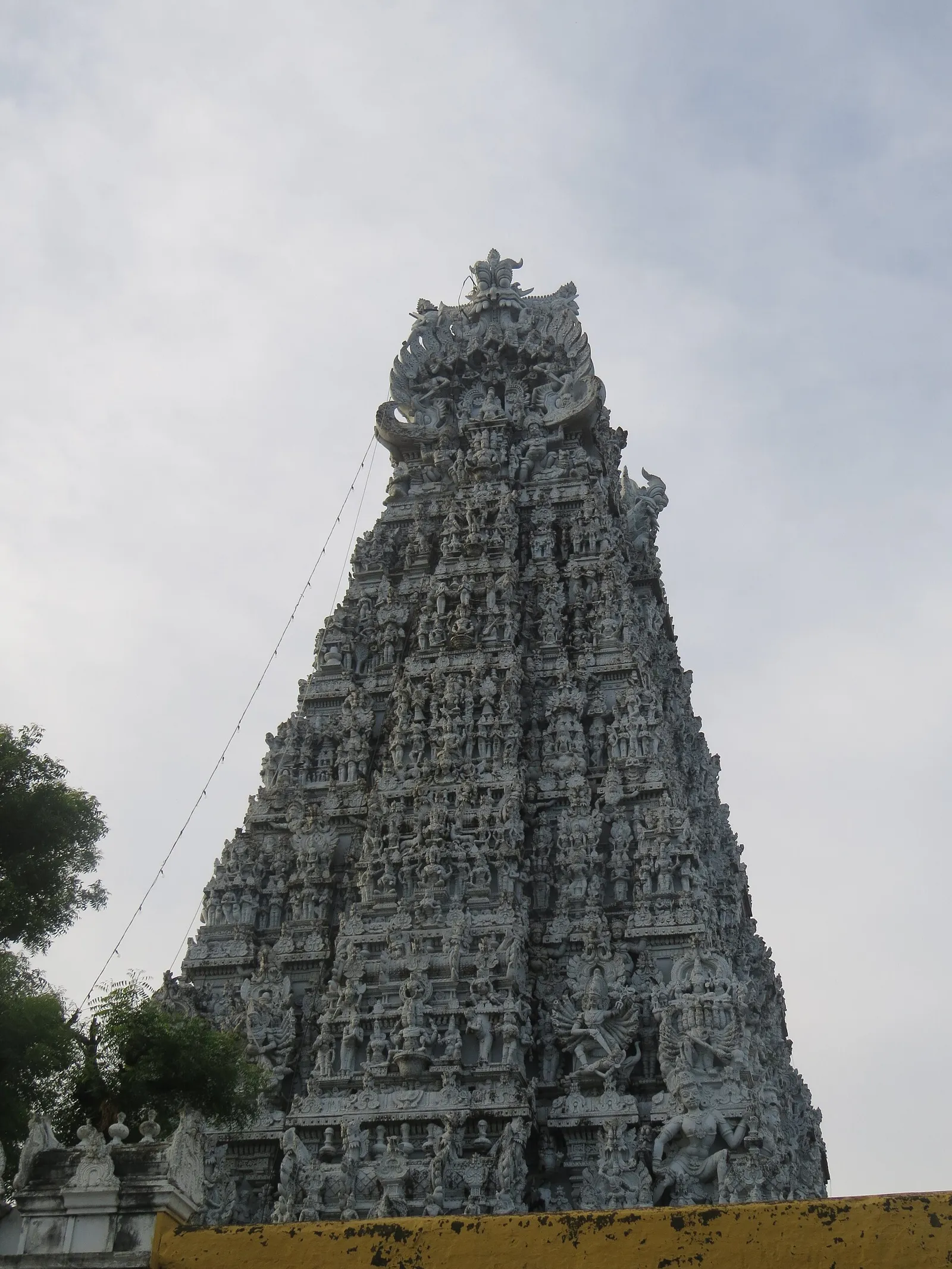
Nagaraja, Mandaikadu and Thiruvattar: The Other District Temples
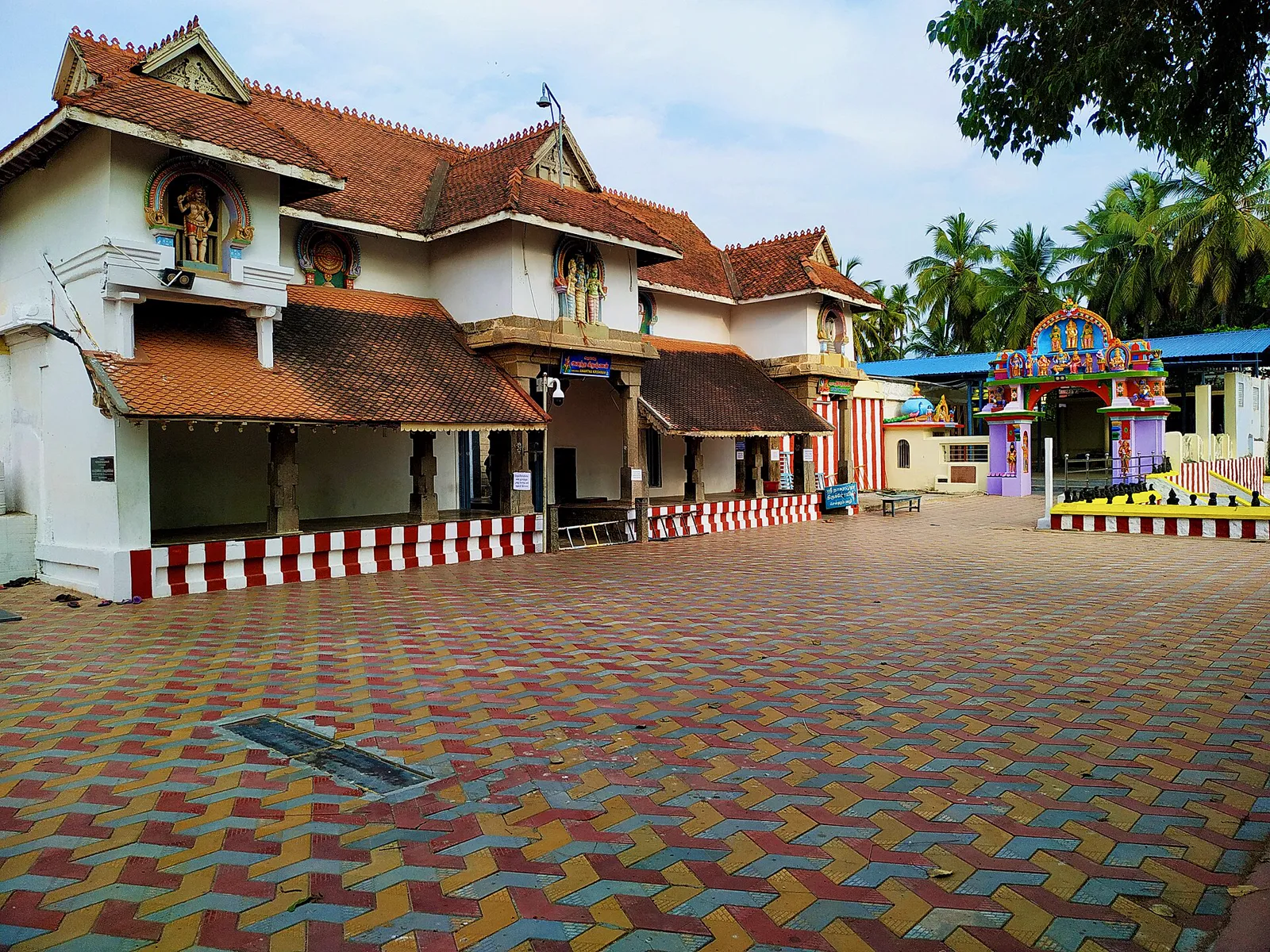
Nagaraja Temple, Nagercoil. The serpent shrine that gave our town its name has Kerala-style tiled roofs and a sand floor in the sanctum. Men remove their shirts for the inner courtyards; trousers are generally fine. It is a short auto ride from Vadasery. More in our Nagaraja Temple guide.
Mandaikadu Bhagavathi Amman. The coastal temple known as the "Sabarimala of women" draws huge crowds of women devotees, especially during the Masi Kodai festival (February to March). Wear traditional dress: saree or salwar kameez for women, dhoti for men, and men should be ready to remove their shirts. The temple publishes no written rule, so follow what other devotees around you are doing. See our Mandaikadu temple guide.
Thiruvattar Adikesava Perumal. This old Vaishnava temple near Kulasekharam is built in the Kerala style and is closely linked to Padmanabhaswamy in Thiruvananthapuram. Expect Kerala custom here: shirts off for men, and a mundu or dhoti preferred. Few shops nearby rent dhotis, so carry one. It fits well on a day with Padmanabhapuram Palace and Thirparappu falls. If you are visiting several Shiva shrines on Maha Shivaratri, our Shivalaya Ottam guide explains the traditional runners' dress of saffron or white dhoti.
Sree Padmanabhaswamy Temple Dress Code: The Strictest on the Route
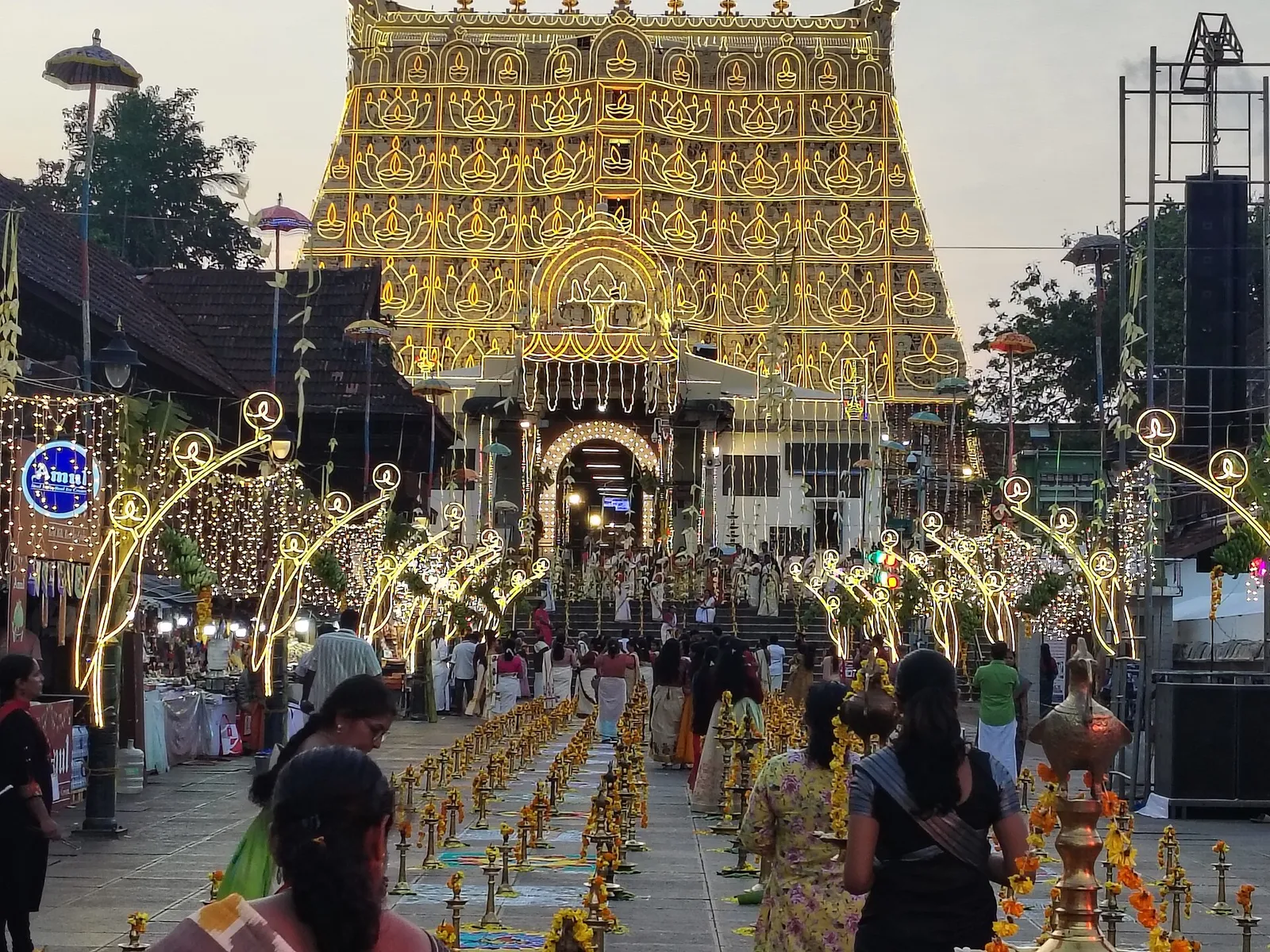
Many visitors drive down from Thiruvananthapuram and stop at Padmanabhaswamy on the way, as in our Trivandrum to Kanyakumari day trip. This is where people get turned away most often, so dress for it before you leave the hotel.
- Men: a mundu or dhoti reaching to the ankles, and no shirt of any kind. Trousers are not accepted on their own. Kerala Tourism says the temple now lets devotees tie a dhoti over trousers, and dhotis can be rented at the entrance.
- Women: saree, mundum neriyathum (set-mundu), skirt and blouse, or half-saree. Churidar and salwar kameez have been fought over for years: an order allowing them in 2016 and another in 2020 were each stayed by the courts within days. Kerala Tourism says a dhoti over a churidar is now allowed, but some recent visitors report being refused. To be safe, wear a saree or set-mundu.
- Other rules: phones, cameras and bags go into the cloakroom; there is a security check; and entry is limited to Hindus.
Can I Wear Jeans, Shorts, Leggings or a T-Shirt? Direct Answers
- Jeans (men): usually accepted at Kumari Amman, Suchindram and Nagaraja if your shirt is off. Not accepted at Padmanabhaswamy unless covered by a mundu.
- Jeans (women): risky everywhere. You may be let in at a quiet hour, or you may be stopped. Wear a churidar or saree.
- Shorts or three-quarter pants: no, for men or women, at any of these temples. Young children are the exception.
- Leggings: fine under a knee-length or longer kurta with a dupatta. Not with a short top, and not at Padmanabhaswamy.
- T-shirt: men take it off anyway. Women should choose a kurta or blouse that covers the shoulders.
- Lungi: visitors report being stopped in a lungi at Kumari Amman. A plain white veshti costs very little; buy one.
- Western dress for foreign visitors: the same rules apply whatever your nationality. Temple staff are usually kind about it and will point you to a shop selling a dhoti or shawl.
Vivekananda Rock, the Glass Bridge and Padmanabhapuram Palace: What Is Fine
Not everything on a Kanyakumari day is a temple, and you do not need to change for every stop.
- Vivekananda Rock Memorial: run by Vivekananda Kendra, not a temple board. There is no strict dress code, but modest clothes covering shoulders and knees are expected, shoes come off before the mandapams, and the Dhyana Mandapam (meditation hall) is a place to keep quiet. The Poompuhar ferry runs about 8 AM to 4 PM; tickets are ₹100 normal or ₹300 special entry. See our ferry booking guide.
- Glass bridge to Thiruvalluvar statue: no dress code. Wear shoes that grip; the deck gets hot and bright by late morning. More in our glass bridge guide.
- Padmanabhapuram Palace: a museum, so no dress code, but footwear comes off at the entrance. It is closed on Mondays and open roughly 9 AM to 4:30 PM, with some listings showing a midday break.
- Sunrise point and beach: wear what you like, but if you plan to go into the temple straight after the sunrise, dress for the temple first. Our sunrise guide has the timings.
Footwear, Phones and What to Pack for a Beach-and-Temple Day
A typical day here mixes sea spray, hot stone floors and two or three temples. This is what local families carry:
- One white veshti or dhoti per man, plus a thin towel for the shoulder. A ready-to-wear velcro veshti is easiest for first-timers.
- A saree, churidar or long skirt for each woman, worn from the morning if Padmanabhaswamy or Suchindram is on the list. Cotton is far more comfortable than synthetic in the coastal heat.
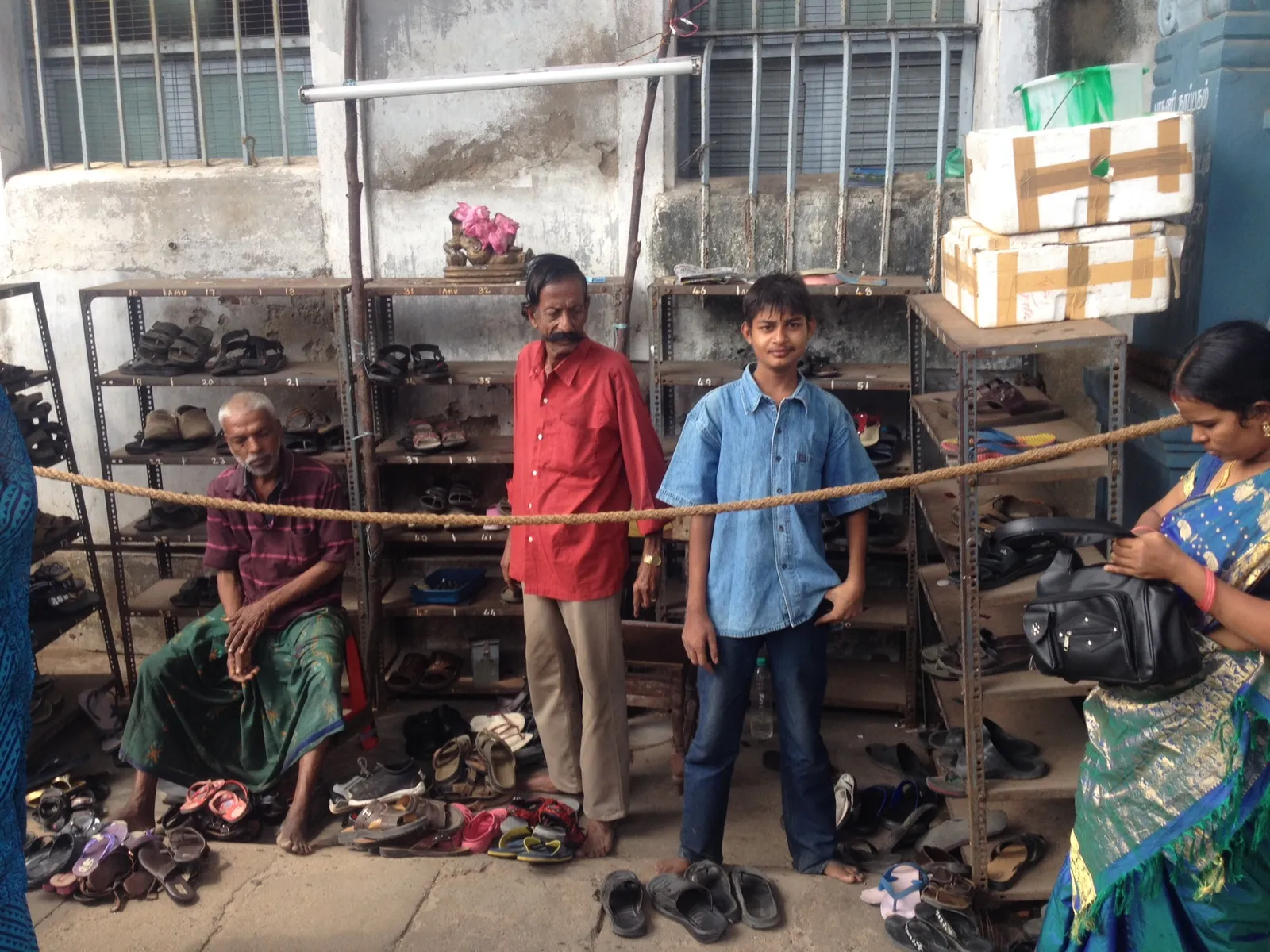
- Slip-on sandals. Shoes come off at every temple and at the rock memorial. Most stands charge a few rupees. Granite floors burn by noon, so plan temples for early morning or evening.
- A small bag you can leave behind. Phones, cameras and leather go to the deposit counter or stay in the car. If you have a car and driver, the locked car is the simplest place for them.
- A change of clothes if you bathe at the ghat. Pilgrims often take a dip at the cape before darshan. Do not enter the temple in dripping wet clothes.
- Children: small boys can usually keep their shirt on and wear shorts; girls are fine in a frock or long skirt. Teenagers follow the adult rules.
Senior travellers and families with small children will find more pacing tips in our senior citizens tour guide and Kanyakumari with kids.
A Brief Note on Rameswaram Temple Dress Code for Women
Many travellers do the coastal run from Rameswaram to Kanyakumari (our road trip guide covers it). At Ramanathaswamy temple, women wear a saree, salwar kameez or churidar with a dupatta; men wear a dhoti or trousers and, unlike Kanyakumari, normally keep their shirts on. After the 22 theertham well baths, change into dry clothes before darshan. Rameswaram falls under the same HR&CE phone and photography rules.
Where Kumari Snacks Fits In
Our family has sold sweets on Asambu Road in Vadasery, Nagercoil since 1965, and we arrange temple and sightseeing cabs through our local driver network. Our drivers know which temple wants what, when the doors close, and where to buy a veshti on the way. Every tour package comes with a complimentary Kumari Snacks welcome box. If your day ends in Nagercoil, our onion-cashew pakoda comes out of the kadai hot at 4 PM daily, and pure cow ghee wheat halwa keeps 15 to 20 days for the journey home. The temple pilgrimage tour circuit and temple prasadam trail show how the day fits together.
Book a Kanyakumari Temple Cab with a Local Driver
Kumari Amman, Suchindram, Nagaraja and Mandaikadu in one day, timed around darshan hours, with a local driver who knows each temple's dress code.
- Sedan, SUV or Tempo Traveller; pickups from Trivandrum Airport, Nagercoil Junction or your Kanyakumari hotel
- Complimentary Kumari Snacks welcome box with every tour
- 24–48 hours advance notice preferred
 Nagaraja Temple, Nagercoil
Planning the wider trip? Our Kanyakumari tour packages page lists the half-day, full-day and two-day circuits, and the one-day itinerary shows how to fit temples around the ferry and sunset.
Frequently Asked Questions
Is there any dress code in Kanyakumari temple?
Yes. At the Kumari Amman (Bhagavathy Amman) temple, men are expected to remove shirts and vests before going in and to wear a dhoti or full-length trousers, never shorts. Women should wear a saree, salwar kameez or churidar with a dupatta, or a long skirt. The rule is enforced at the entrance by temple staff.
What is the Kanyakumari temple dress code for women?
Women and girls should wear a saree, half-saree, salwar kameez or churidar with a dupatta, or a long skirt and blouse. Shorts, short skirts, sleeveless or low-cut tops and tight western wear are likely to be turned back. Women do not need to cover their heads.
Can I wear jeans to Kanyakumari temple?
Men in jeans or full-length trousers are usually let in at the Kumari Amman temple, as long as they remove their shirt; a dhoti is safer and more respectful. Women in jeans may be stopped, so a churidar or saree is the better choice. At Sree Padmanabhaswamy Temple in Thiruvananthapuram, jeans are not accepted for anyone without a mundu over them.
What is the Suchindram temple dress code?
Suchindram Thanumalayan temple follows the same custom as Kumari Amman: men remove shirts and vests and wear a dhoti or veshti, with full-length trousers usually tolerated and shorts refused. Women wear a saree, salwar kameez or churidar with a dupatta. Photography is banned inside, and phones may be carried only if switched off.
Are mobile phones allowed inside Kanyakumari temples?
Photography is not allowed inside the Kumari Amman, Suchindram or Padmanabhaswamy temples. Tamil Nadu's HR&CE Department banned camera phones in 52 major temples from 1 September 2026, then relaxed the rule in October 2026: phones may now be carried if switched off, but photos, videos and selfies are banned, and optional deposit counters remain. Padmanabhaswamy in Kerala still does not allow phones inside at all.
Do men have to remove their shirt in Kanyakumari temple?
Yes. The Kanyakumari district temples were part of the old Travancore kingdom and follow the Kerala custom of men entering bare-chested. Kumari Amman, Suchindram, Nagaraja and Thiruvattar all expect men to take off shirts, T-shirts and vests. A thin towel or angavastram over the shoulder is fine. Young boys are usually let in with a shirt on.
Rules at temples change and are applied at the gate; this guide reflects published sources and visitor reports as of October 2026. Header photo: Kainjock via Wikimedia Commons, CC BY-SA 3.0.
Explore Related Temple Guides
Plan the rest of your temple day: