Most visitors race through Kanyakumari district for one sunrise and leave. Locals know the district differently — as a landscape stitched together by temples, some of them among the oldest and strangest in Tamil Nadu. Within twenty kilometres of Nagercoil you can stand under a gopuram that rings like a musical instrument, inside a serpent shrine that gave a whole city its name, and at a seaside temple where the deity faces the meeting point of three seas. This is the trail we would take a friend on, along with the sweet tradition that runs quietly through all of it.
A District of Living Temples
The temples here are not museums. Suchindram still holds its car festival every December–January, the Nagaraja Temple still receives its daily queue of devotees, and village temples across the district keep their own calendars of processions and feasts. Because the district sat under Travancore rule until 1956, many of its temples mix Tamil granite traditions with Kerala's tiled roofs and woodwork — an architecture you will not see together anywhere else in Tamil Nadu. The comfortable way to do the trail is to base yourself in Nagercoil and take the three great temples in a single unhurried day.
Suchindram Thanumalayan Temple
Seven kilometres from Nagercoil, on the road towards Kanyakumari, Suchindram is the temple scholars travel for. Its deity, Sthanumalayan, represents Shiva, Vishnu, and Brahma in a single form — a combination so rare that priests here will patiently explain it to every newcomer. The white seven-storey gopuram is covered in carved figures, and inside are the famous musical pillars: clusters of thin granite columns, each cut from a single stone, that sound different notes when tapped. Do not miss the Hanuman statue, around eighteen feet of a single carved stone, where devotees offer garlands of vadai. Mornings before ten are the quiet hours; the temple closes in the early afternoon and reopens towards evening.
Nagaraja Temple, Nagercoil's Namesake
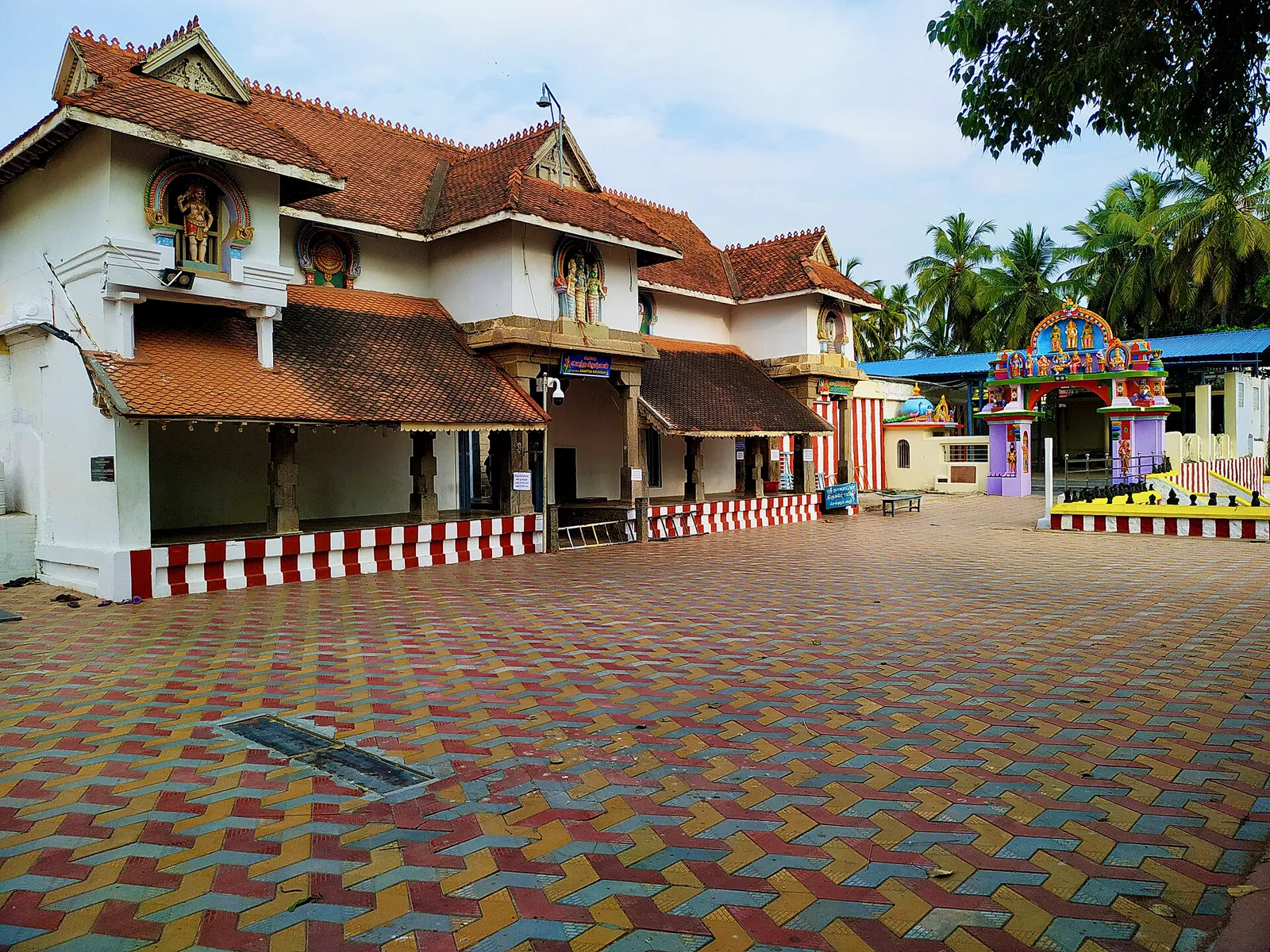
Back in town, the Nagaraja Temple is the reason Nagercoil is called Nagercoil — "the temple of the Nagas". The presiding deity is the serpent king, and the sanctum keeps an earthen floor whose sand is given as prasadam, a practice found almost nowhere else. The architecture is strikingly Kerala in character: low tiled roofs, wooden pillars, and a calm, shaded courtyard that feels a world away from the bus stand five minutes' walk from it. We have covered the shrine in detail in our Nagaraja Temple guide, but even a short visit makes sense of the city around it — the old streets nearest the temple are where Nagercoil began.
Kumari Amman at the Cape
The trail ends where the land does. The Kumari Amman (Bhagavathy) Temple stands right on the shore at Kanyakumari, and the goddess — a young virgin deity, from whom the town takes its name — faces the sea. Local lore says the diamond of her nose ring once shone so brightly that sailors mistook it for a lighthouse, which is why the sea-facing door stays closed most of the year. Non-Hindus may not enter the sanctum, but the temple's shoreline setting, with the Vivekananda Rock Memorial floating offshore, is worth the walk for anyone. Combine it with the ferry and you have a full afternoon; if you are extending the trail inland, the wooden Padmanabhapuram Palace pairs naturally with Suchindram, since both carry the Travancore stamp.
The Sweet Thread: Prasadam & Festival Sweets
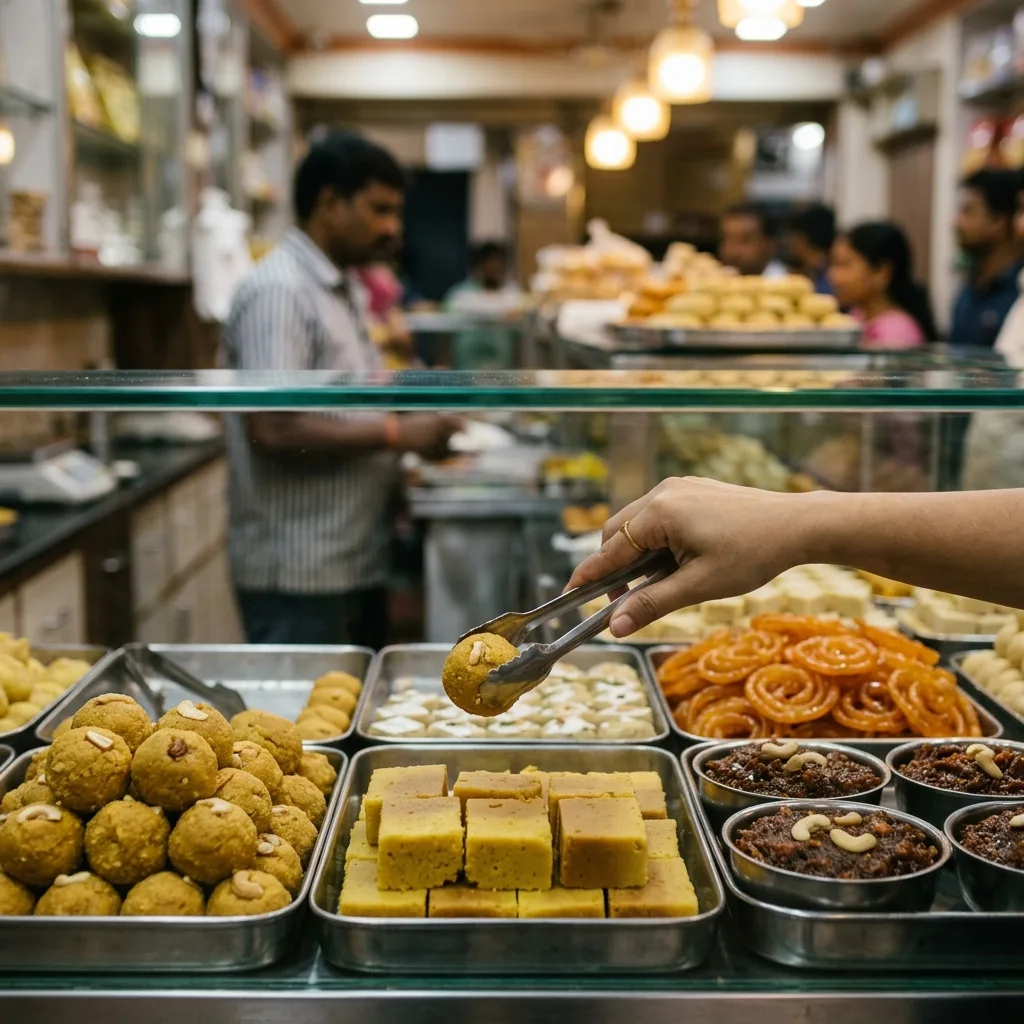
Every temple on this trail trails sweetness behind it. Laddu is the district's default prasadam and its default celebration sweet — after a car festival, a temple wedding, or an ear-boring ceremony, laddu boxes travel to every relative's house. Payasam simmers in temple kitchens on festival days, and sweet pongal appears in January when the harvest festival and the Suchindram car festival crowd the same weeks. In the days before a big festival, temple-going families across Nagercoil place their ghee laddu orders by the box — our own counter in Vadasery has taken those festival-week orders for sixty years, and the rhythm has barely changed since 1965. If you want the wider story of what fills those boxes, our guide to the traditional sweets of Kanyakumari covers each one.
A practical note for the trail: dress modestly, leave footwear at the stands provided, and carry small change for offerings. Photography rules vary — Suchindram is strict inside — so ask before raising a camera.
Frequently Asked Questions
Which temples should I visit around Nagercoil?
Three temples make a comfortable one-day trail: the Nagaraja Temple in the heart of Nagercoil itself, the Suchindram Thanumalayan Temple about 7 km away, and the Kumari Amman (Bhagavathy) Temple on the shore at Kanyakumari, roughly 20 km from town. If you have extra time, the Adikesava Perumal Temple at Thiruvattar makes a fine half-day addition.
What is Suchindram temple famous for?
Suchindram Thanumalayan Temple is famous for its single deity representing Shiva, Vishnu, and Brahma together — rare in India — along with its white seven-storey gopuram, musical pillars carved from single blocks of granite that ring with different notes, and a Hanuman statue around 18 feet tall carved from one stone.
What sweets are tied to temple festivals here?
Ghee laddu is the festival sweet of the district — it is the classic prasadam and the sweet families distribute after car festivals and temple weddings. Payasam, appam, and sweet pongal are made for specific festival days. During big festivals at Suchindram and the Nagaraja Temple, families in Nagercoil place laddu orders by the box with Vadasery sweet shops like ours days in advance.
Hero image: Vinayaraj, CC BY-SA 4.0, via Wikimedia Commons.
Festival Sweets, Made the Temple-Town Way
Ordering laddu for a festival or function? Visit us on Asambu Road, Vadasery, or order fresh ghee sweets delivered to your city.
Call Now Order on WhatsApp