Every city has a founding story; ours is written into the name. Nagercoil is simply "Nagar-kovil" run together — the temple of Nagaraja, the serpent king — and the shrine that lent the city its name still stands in the old town, low-roofed and quiet, going about its worship as it has for many centuries. Visitors who race from the railway junction to Kanyakumari miss it entirely. This guide is for those who stop.
The Serpent Shrine Behind the City's Name
Long before Nagercoil was a district headquarters, it was a grove settlement where serpent stones were worshipped — a tradition this coastal belt shares with Kerala, where every old family compound kept a sarpa kavu, a serpent grove. The Nagaraja Temple grew from exactly such a grove. Its presiding deity is the five-headed serpent king, and the shrine's fame under the Travancore kings drew pilgrims from both sides of the Ghats. As houses, markets, and eventually a city gathered around the kovil, the temple's name swallowed the town's: people went to Nagar-kovil, then lived in it. The temple also carries an unusual layered history — Jain tirthankara figures carved on its pillars point to an older Jain presence, quietly absorbed as the shrine changed hands across the centuries.
Architecture: A Kerala-Style Temple in Tamil Nadu
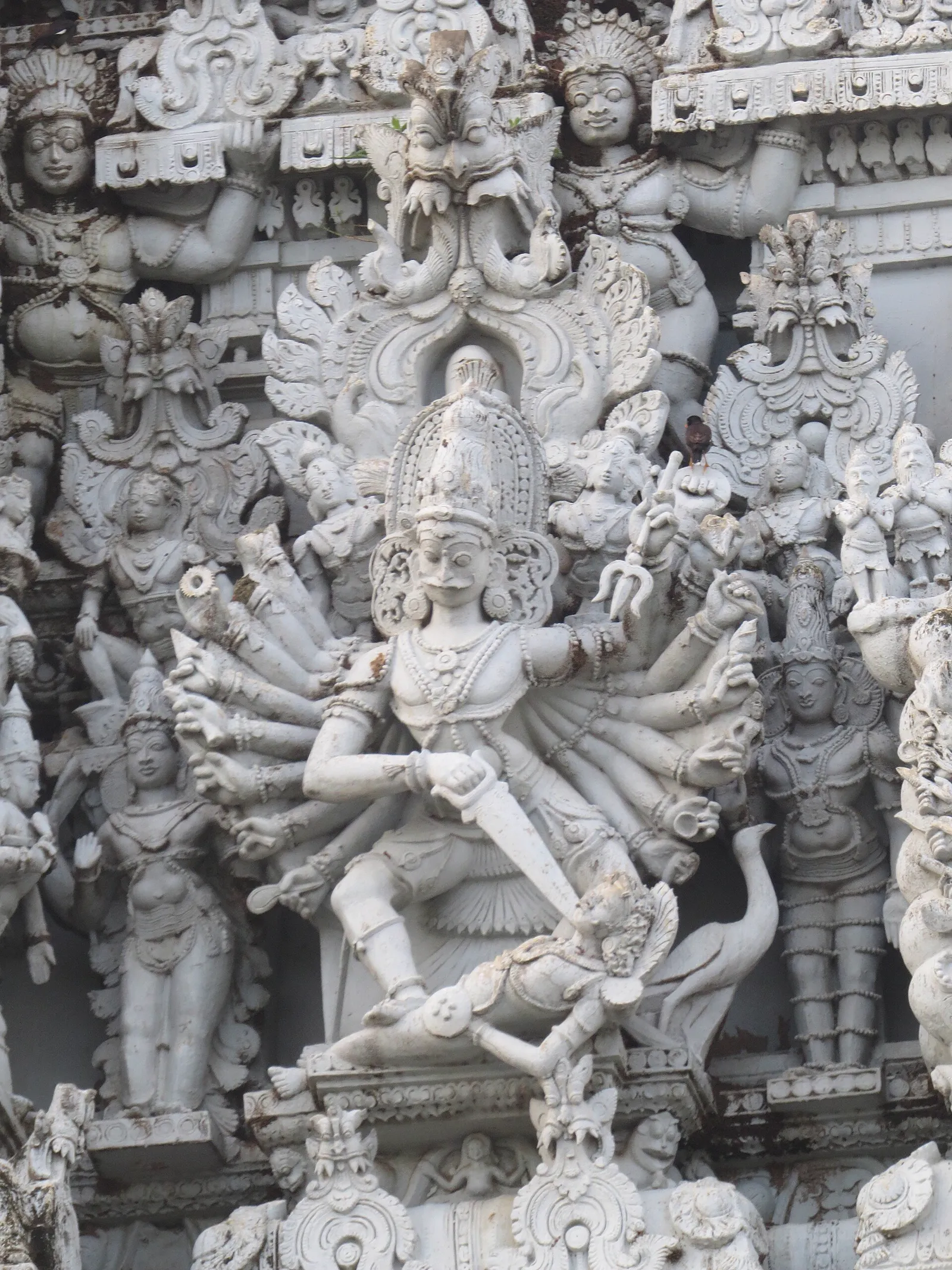
Approach expecting a Tamil temple — a painted gopuram climbing into the sky — and the Nagaraja Temple will confuse you. There is no tower. Instead: sloping tiled roofs, timber pillars, mud-and-laterite walls, and shaded courtyards, the classic Kerala temple grammar, a legacy of the centuries when this district was ruled from Padmanabhapuram and Travancore. Two details are worth travelling for. The sanctum floor is sand rather than stone — the deity sits, in effect, on the earth of the original grove, and the sand given as prasadam is prized by devotees. And throughout the courtyards stand rows of naga stones, serpent images gathered from old groves and family lands, resting under the temple's care. For the wider circuit of shrines this district keeps, see our temple trail of Kanyakumari district.
Festivals & the Temple Calendar
The temple's year peaks twice. The Kodai festival, around the Tamil month of Aavani, brings processions, music, and evening crowds that spill into the surrounding streets. Nagara Chaturthi is the serpent's own day, when devotees — many praying for children or relief from sarpa dosham — offer milk, turmeric, and eggs at the shrine, and the queue of the faithful stretches out of the courtyard. On ordinary weeks, Fridays and Sundays are the busy darshan days. Festival time here folds into the district's wider calendar of celebration; the same families lighting lamps at the kovil are the ones exchanging sweet boxes at Deepavali in Nagercoil.
Visiting: Timings & Etiquette
The temple follows the usual two-session rhythm — open roughly 4:30 AM to 11:30 AM and again 5 PM to 8 PM, with the sanctum closed through the afternoon. Dress modestly; men remove shirts before entering the inner courtyards, in the Kerala manner. Photography inside the sanctum area is not permitted. The gentlest time to visit is the early morning, when the sand floor has just been raked and the only sound is the priest's bell; the most atmospheric is a festival evening, lamps multiplying along the tiled eaves.
Around the Temple: The Old Town
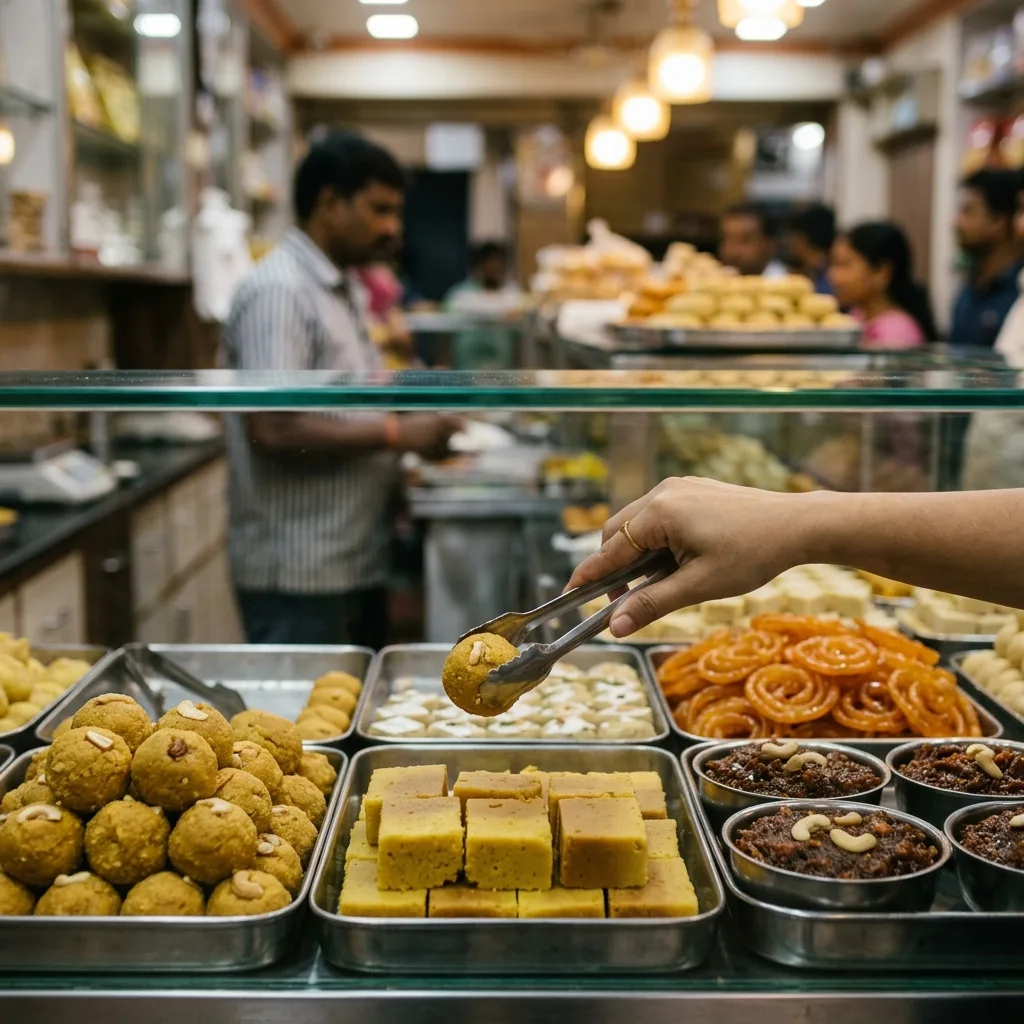
The streets around the kovil are the oldest part of Nagercoil — narrow, shaded, lined with flower sellers, brass-lamp shops, and houses whose tiled roofs echo the temple's own. It is a good half-hour's wandering. And festival evenings here end the way most Nagercoil evenings end: with something sweet. Families walk out of the temple and towards the Vadasery market for hot ghee laddu and jalebi — a procession our own counter has watched, and supplied, since 1965. The full sweet tradition behind those festival plates is told in our guide to the traditional sweets of Kanyakumari.
Frequently Asked Questions
Why is Nagercoil named after the Nagaraja Temple?
Nagercoil is a compression of 'Nagar-kovil' — the temple (kovil) of the serpent king (Nagaraja). The town grew up around this ancient shrine to the snake deity, and as the settlement expanded, the temple's name simply became the town's. Locals still say they are going 'to the kovil' and everyone knows which one is meant.
What is unique about Nagaraja Temple architecture?
The temple is built in the Kerala style rather than the Tamil gopuram style — low tiled roofs, timber pillars, and quiet courtyards instead of towering gateways. This reflects centuries under Travancore rule. The sanctum floor is sand, not stone, and serpent stones gathered from old groves line the courtyards, both rare features in Tamil Nadu.
When are the temple's main festivals?
The biggest celebrations are the annual Kodai festival, usually falling around the Tamil month of Aavani, and Nagara Chaturthi, when serpent worship is at its height and devotees offer milk and turmeric at the shrine. Fridays and Sundays draw the largest regular crowds, and festival evenings fill the surrounding old-town streets.
Hero image: A.S. Thanumaleayan, CC0, via Wikimedia Commons.
End the Temple Evening the Local Way
Fresh laddu, jalebi, and festival sweets from our Vadasery kitchen — a short ride from the kovil, or delivered to your city.
Call Now Order on WhatsApp