Every year we watch visitors arrive at the Kumari Amman temple at the wrong hour, in the wrong clothes, wondering why the sanctum is shut or why a guard is waving them back. None of it is unfriendliness — it is simply a temple with its own rhythm, one locals learn as children and travellers rarely get told in advance. This guide sets out the Kanyakumari temple timings, the dress code, and the small etiquette that makes a darshan here smooth rather than stressful, along with timings for the district's other great shrines.
The Kumari Amman (Bhagavathy Amman) Temple
The goddess who gives Kanyakumari its name is Kumari Amman — Devi Kanya Kumari, the eternal virgin, believed to stand guard where the land runs out and three seas meet. Legend holds that she performed severe penance here waiting to marry Shiva, and when the wedding was interrupted at the last moment by a trick of the gods, she remained unmarried, a fierce, protective virgin goddess facing the open sea. Locals tell a second story alongside it: the diamond in her nose ring once flashed so brightly it was mistaken for a lighthouse, which is why the temple's eastern, sea-facing door opens only rarely, on specific festival days. The temple is believed to be many centuries old, mentioned in early Tamil literature, and it has stood through the changing fortunes of the Pandya and Travancore rulers who once controlled this coast.
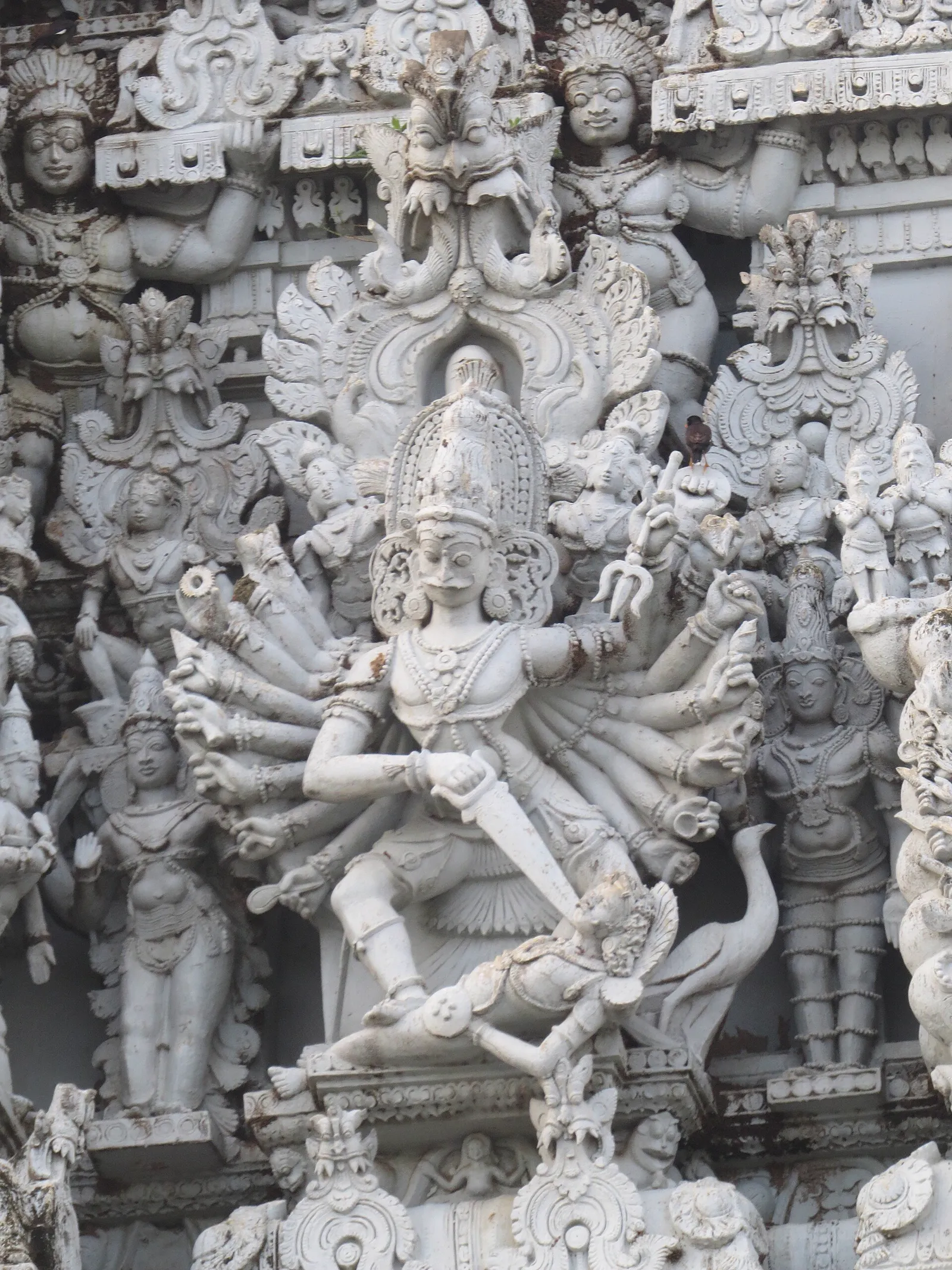
Kumari Amman Temple Timings
The temple keeps two darshan sessions a day, as most older Tamil Nadu temples do, with the sanctum closed through the hottest hours of the afternoon:
- Morning session: roughly 4:30 AM to 12:15 PM
- Evening session: roughly 4:00 PM to 8:15 PM
These are the timings most visitors and pilgrim guides quote, but temple hours shift a little around major festivals and on the goddess's own special days, so treat them as a reliable working figure rather than gospel — the temple office at the entrance will confirm the day's exact schedule if you ask. The queue itself rarely takes more than twenty to thirty minutes outside festival season; on Navaratri days and full-moon weekends, it can stretch well past an hour.
Our own family's advice, offered to every relative who visits: go early. The half hour after the temple opens, before the sunrise crowd from the beach has finished breakfast and turned towards the sanctum, is the quietest darshan of the day. The evening session picks up again after sunset, when the shore cools and families out for a walk drop in almost as a matter of habit.
Dress Code, in Detail
The dress code here is stricter than at many temples further north, and it is enforced at the entrance, not suggested. Men are expected to remove their shirts before entering the inner courtyard — vests and t-shirts come off along with belts, wallets, and anything leather. Shorts are not permitted for men or boys; a lungi, dhoti, or full-length trousers is the safe choice, and dhotis can usually be rented near the entrance if you arrive unprepared. Women and girls are expected in a sari, salwar kameez, or other traditional Indian dress; sleeveless tops, short skirts, and tight western clothing will get you turned back at the gate. None of this is unique to Kumari Amman — it is the same standard you will meet at Suchindram and the Nagaraja Temple — but because this is often a first stop for travellers straight off a train or bus, it catches more people out here than anywhere else in the district.
Footwear, Phones & Practical Notes
Leave footwear at the stands provided near the entrance — there is a small fee, worth it on a hot stone floor. Phones and cameras are generally not permitted past the entrance; most visitors deposit them at a counter before joining the queue and collect them on the way out, so photograph the gopuram and the shore before you go in, not during. Non-Hindu visitors are welcome in the outer courtyards, but entry to the inner sanctum is, as at several older Tamil temples, generally reserved for Hindu devotees — temple staff enforce this on the day, so ask politely if unsure.
Nearby: Gandhi Mandapam & the Meditation Hall
A temple morning here naturally extends into two more contemplative stops. The Gandhi Mandapam, a short walk along the shore, marks the spot where Mahatma Gandhi's ashes were kept before immersion, its design letting a shaft of sunlight fall exactly there every year on his birthday. Across the water, the Vivekananda Rock Memorial holds a quiet meditation hall built for the same kind of stillness the temple visit begins — many treat the ferry crossing and the hall as a continuation of the same morning. Our one-day Kanyakumari itinerary shows how to fit sunrise, the temple, and the ferry into one unhurried sequence.
Suchindram Thanumalayan Temple Timings
About 13 km from Kanyakumari, on the road back towards Nagercoil, stands the district's grandest temple: Suchindram Thanumalayan, one of the few shrines where a single sanctum honours Shiva, Vishnu, and Brahma together. Its seven-storey gopuram is visible for kilometres, and inside are the celebrated musical pillars — slender granite columns, each carved from a single block of stone, that ring with distinct notes when struck. Suchindram keeps a similar two-session rhythm, open roughly 4:30 AM–11:30 AM and 5:00 PM–8:30 PM, with the same dress code as Kumari Amman. Mornings before ten are calmest; we cover the temple's history at greater length in our temple trail of Kanyakumari district.
Nagaraja Temple, Nagercoil
Closer to home for us, the Nagaraja Temple in the heart of Nagercoil is the serpent shrine that gave the city its name — Nagar-kovil, run together into Nagercoil. Its Kerala-style tiled roofs and sand-floored sanctum contrast sharply with the towering gopurams at Suchindram and Kumari Amman, and it keeps roughly the same 4:30 AM–11:30 AM and 5:00 PM–8:00 PM rhythm. If your day allows a third temple, our full Nagaraja Temple guide covers its history, festivals, and etiquette in detail.
Festival Calendar, in Brief
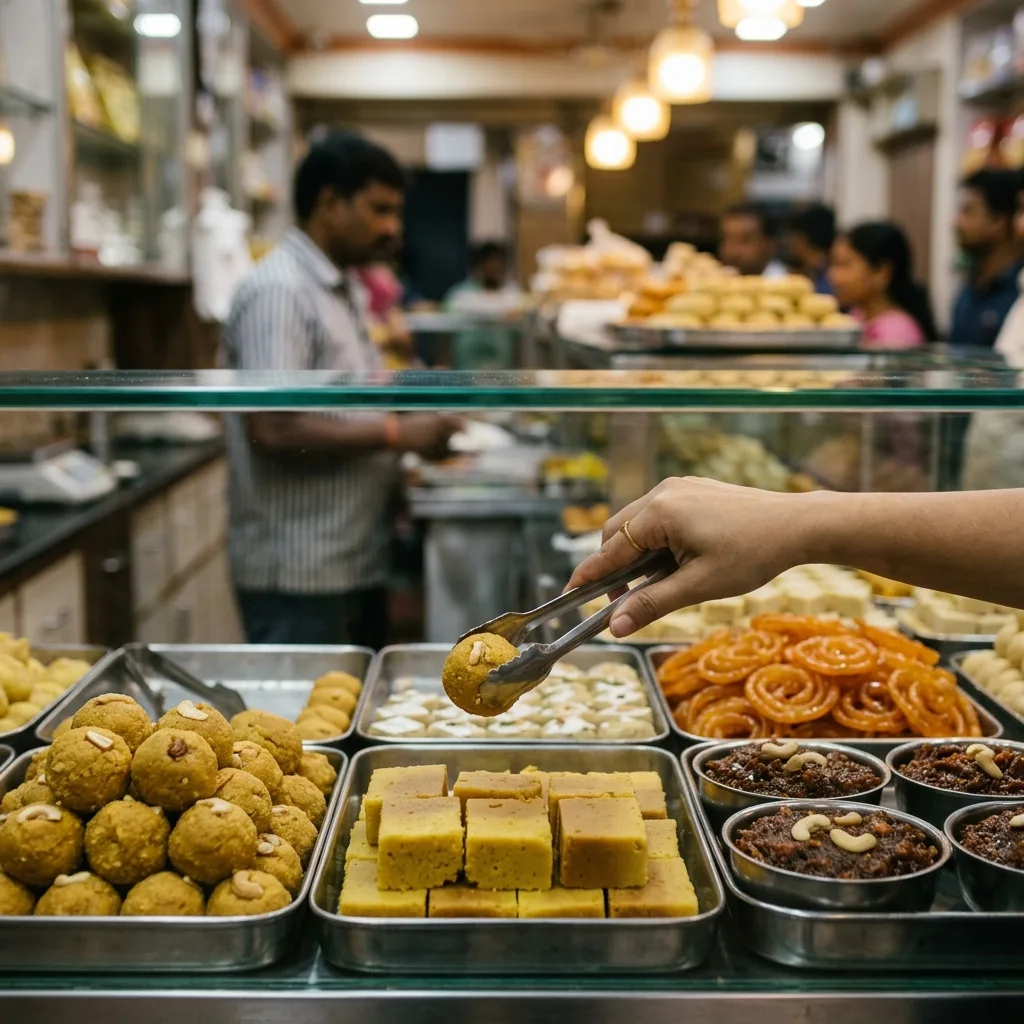
Temple timings stretch on festival days, so it helps to know the calendar before you plan a visit. Navaratri, in September or October, is the busiest stretch of the year at Kumari Amman, with special evening decorations and longer queues each night. Chitra Pournami, the full-moon night in April, draws crowds who believe it is the one night the sun, moon, and the goddess's diamond nose-ring can all be seen aligned over the sea — poetic more than astronomical, but the crowds are real regardless. Suchindram and the Nagaraja Temple each hold their own car festivals, in December–January and around the Tamil month of Aavani, when the deity is drawn through the streets on a wooden chariot and the town turns out in full. Festival evenings across the district end the same way — families walking home with boxes of ghee sweets, and festival-week orders for laddu and jalebi filling counters like ours in Vadasery days in advance.
Fitting a Temple Morning Into Your Trip
With only one day at the Cape, our one-day Kanyakumari itinerary places the temple visit right after sunrise, before the ferry queue for Vivekananda Rock builds up. With two days to spend, our 2-day Kanyakumari itinerary gives Kumari Amman and Suchindram their own unhurried morning apart from the beach and fort sights. And if you would rather not drive the temple circuit yourself, our guide to Kanyakumari tour packages covers the local cars and drivers who run exactly this Kumari Amman–Suchindram–Nagaraja loop on request.
One last, very local note: after a temple morning, the usual next stop in Nagercoil families is not another sight but a sweet box. Festival-season darshan almost always ends with prasadam-style ghee sweets carried home — laddu, halwa, or a fresh box of mysore pak — and our own counter on Asambu Road in Vadasery has been part of that walk home since 1965.
Frequently Asked Questions
What are the Kumari Amman temple timings?
The Kumari Amman (Bhagavathy) temple in Kanyakumari is open in two sessions: roughly 4:30 AM to 12:15 PM in the morning, and 4:00 PM to 8:15 PM in the evening. The sanctum closes through the afternoon. Timings shift slightly around major festivals, so it is worth checking at the temple office if you are visiting on a festival date.
What is the dress code for Kanyakumari temple?
Men are expected to enter bare-chested — remove your shirt and any leather items such as belts and wallets before the inner courtyard; shorts are not allowed. Women and girls should wear a sari, salwar kameez, or other traditional Indian dress; sleeveless tops, short skirts, and tight western wear are discouraged. Modest, traditional dress is the rule for both the sanctum and the surrounding shore area.
Can non-Hindus enter the Kanyakumari temple?
Non-Hindu visitors are generally welcome in the outer courtyards and can view the temple's architecture and the sea-facing setting, but entry into the inner sanctum where the deity is enshrined is typically reserved for Hindu devotees, as at several older Tamil Nadu temples. Rules are enforced by temple staff on the day, so ask politely at the entrance if you are unsure.
Is photography allowed inside the temple?
Photography and mobile phones are generally not allowed inside the temple premises — most visitors deposit phones and cameras at a counter near the entrance before joining the darshan queue and collect them afterward. Photography of the temple's exterior gopuram and the surrounding shore is usually fine.
Which other temples should I combine with Kanyakumari temple?
Suchindram Thanumalayan Temple, about 13 km away, is the obvious pairing — its musical pillars and Shiva-Vishnu-Brahma sanctum make it the district's grandest shrine. The Nagaraja Temple in the heart of Nagercoil, the serpent shrine that named the city, is a short detour on the same road. Both fit comfortably into a single unhurried temple morning.
Hero image: Vinayaraj, CC BY-SA 4.0, via Wikimedia Commons.
After Darshan, a Sweet Box the Local Way
Visiting the temples this festival season? Visit us on Asambu Road, Vadasery, or order fresh ghee sweets delivered to your city.
Call Now Order on WhatsApp