Quick Answer: What Are the Banana Varieties in Kanyakumari?
The main banana varieties in Kanyakumari district are Matti (the district's own banana, GI-tagged in 2023), Nendran, red banana (Sevvazhai), Poovan, Rasthali, Karpooravalli, the cooking banana Monthan, Robusta and the small temple banana Kadali. Matti, red banana, Poovan and Rasthali are eaten ripe; Nendran and Monthan are mostly cooked. For chips, raw green Nendran is the best banana by a long way.
Walk past the banana wholesalers around Vadasery market early in the morning and you will see a dozen kinds of banana hanging from the rafters: long ridged green bunches, stubby yellow hands, dark maroon fingers, little slender ones with a pointed tip. Kanyakumari is one of Tamil Nadu's wettest districts and shares its soil and rain with Kerala, so it grows both the Tamil and the Malayali favourites. This page is a field guide to telling them apart.
We are a sweet and snack shop, not a fruit seller. We fry one banana, raw Nendran, and have done so on Asambu Road since 1965. The Nendran story has its own pages: what Nendran means and how it compares with Cavendish, Poovan and Rasthali, and why Nendran tastes different in Kanyakumari. Here we cover the whole district.
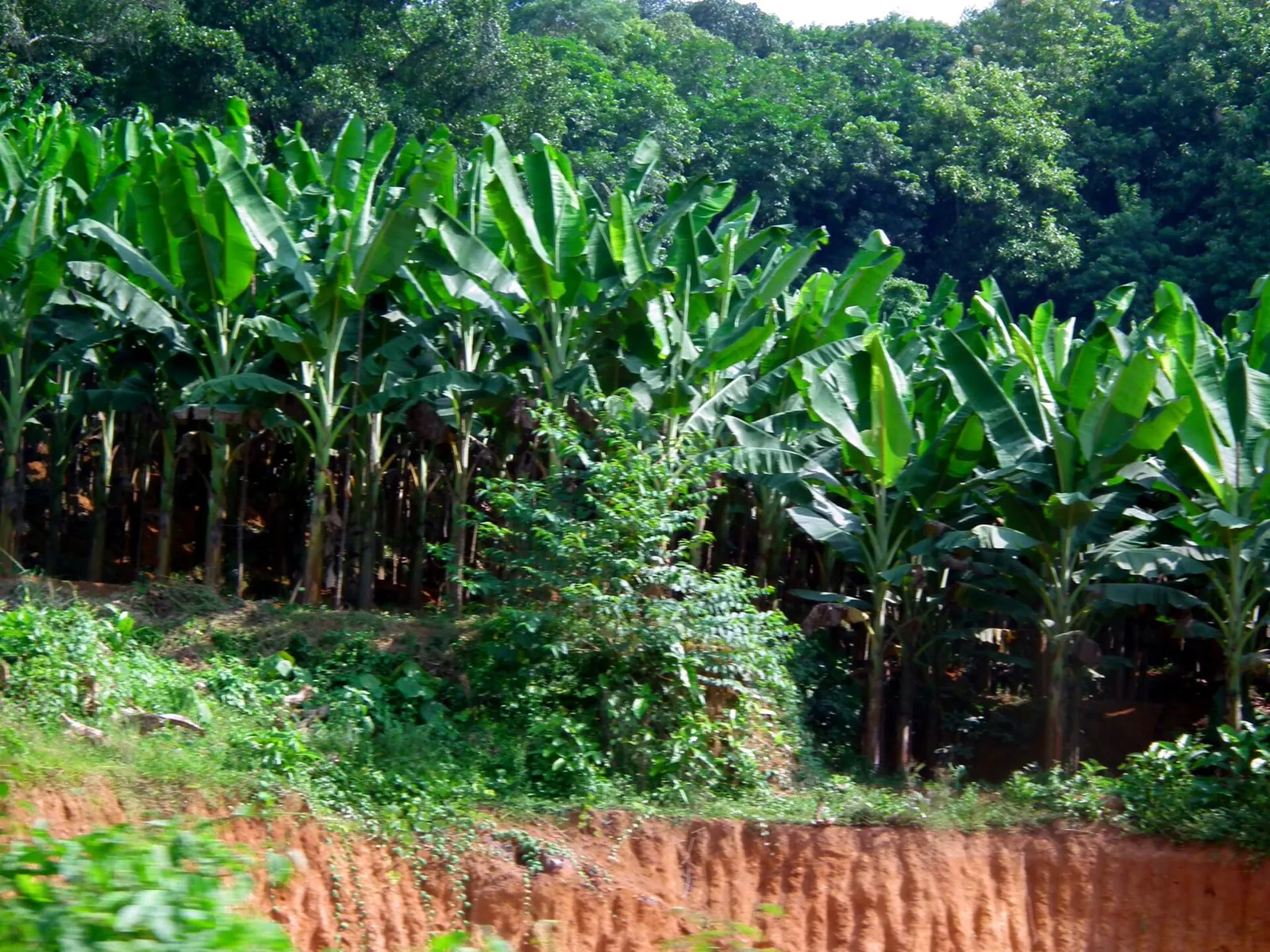
Kanyakumari Banana Types at a Glance
Names change at the state border, and sometimes from one village to the next, so the table gives the names you are most likely to hear in Nagercoil. "Vazhai" is Tamil for the banana plant and "pazham" for ripe fruit; Malayalam speakers say "vazha" and "pazham", and "kaya" for the raw fruit.
| Variety | Local names | How to spot it | Best use | Good for chips? |
|---|---|---|---|---|
| Matti (GI 2023) | Matti pazham; Then Matti, Semmatti | Small, slender fingers with a long pointed tip; untidy, wind-blown bunch | Eaten ripe; traditional baby food | No |
| Nendran | Nenthiram pazham; ethakka (raw), ethapazham (ripe) | Long, thick, ridged fingers; tough peel; orange flesh when ripe | Chips, curries, steamed, pazham pori | Best |
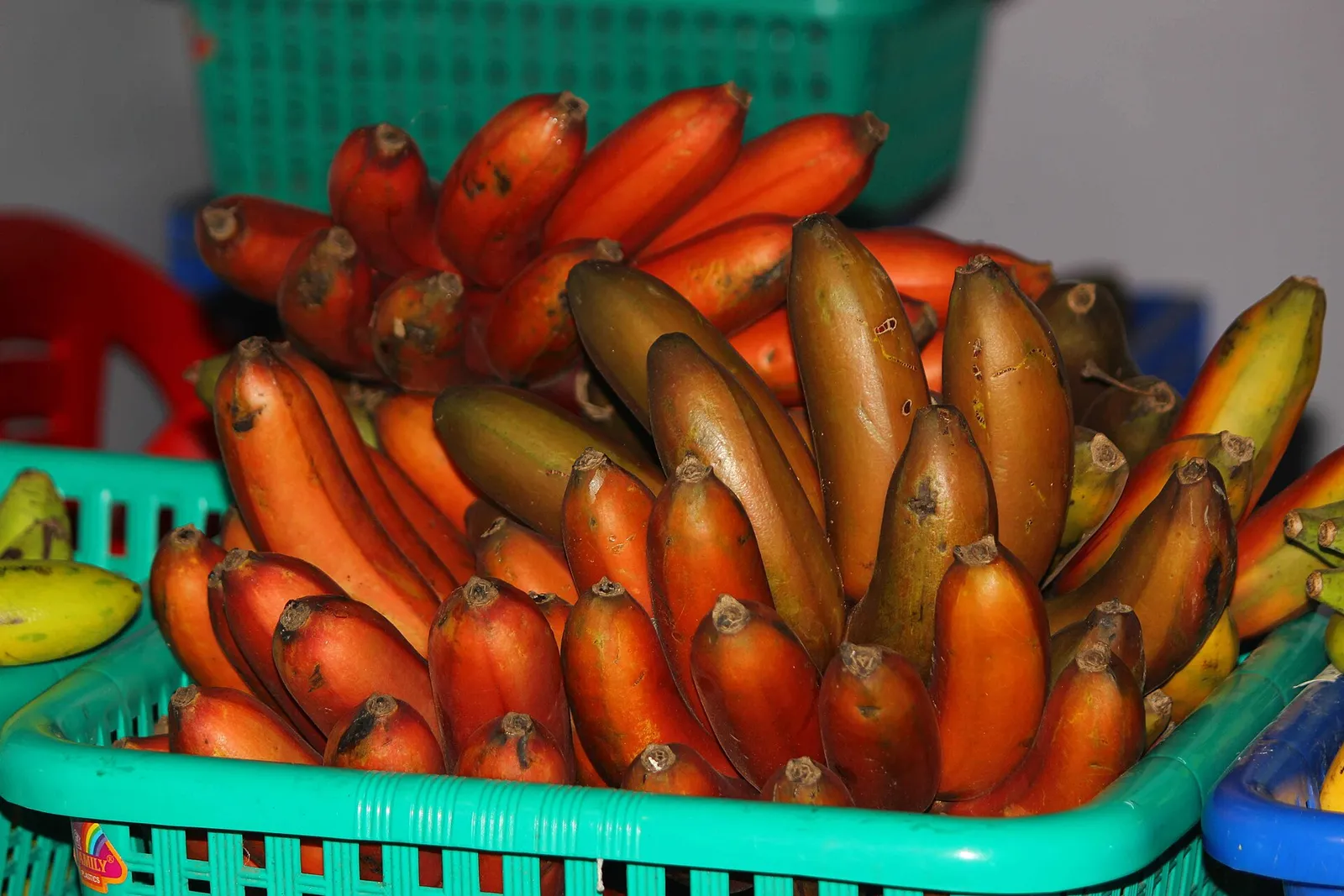
| Red banana | Sevvazhai; Chenkadali, Chenkathali (Malayalam) | Thick maroon-red peel; plump fingers; orange-yellow flesh | Eaten ripe; a prized table fruit | No |
| Poovan | Poovan pazham; Palayankodan (Kerala); Mysore | Medium, cylindrical, thin bright-yellow peel; very large bunch | Everyday eating, temple and festival offerings | No |
| Rasthali | Rasthali, silk banana | Medium, rounded; very thin peel that bruises easily; strong aroma | Eaten ripe; festive meals | No |
| Karpooravalli | Karpooravalli, Karpuravalli | Stocky, angular fingers with a dusty, ash-grey bloom on the peel | Eaten ripe (very sweet); plants also grown for leaves | No |
| Monthan | Monthan, Nattu Monthan; vazhaikkai | Large, five-sided green fingers with a beak-like tip; thick peel | Cooking: poriyal, kootu, bajji, avial | Possible, but paler and harder |
| Robusta (Cavendish) | Robusta, "green banana" | Long, smooth, curved; peel often stays green-yellow when ripe | Everyday eating | No |
| Kadali | Kadali pazham (Malayalam) | Very small, plump, rounded fingers; thin peel | Temple offerings, eaten ripe | No |
Notice the last column: only the starchy cooking bananas fry well, and only one fries brilliantly.
Matti Banana: Kanyakumari's GI-Tagged Banana
If there is one banana that belongs to Kanyakumari alone, it is the Matti. It is a small, slender table banana, a little bigger than a finger, with a long pointed tip; some describe the tip as looking like a crocodile's snout. The bunch is its giveaway: instead of neat, even hands, the fingers splay out and look wind-blown. Ripe Matti is fragrant, sweet with a slight tang, and often described as tasting of honey, with a firm, slightly powdery flesh.
There is more than one kind. The names you will hear include Then Matti (honey Matti), Semmatti (red-tinged), Nal Matti, Kal Matti, Nei Matti (with a ghee-like aroma) and the rare Sundari Matti. Different sources count three to six types, and farmers sometimes use the names differently, so treat that list as a guide rather than a rulebook.
Matti banana GI tag: the facts
- Registered name: Kanyakumari Matti Banana.
- Registered: 2023, by the Geographical Indications Registry in Chennai (GI number 757). The application was filed in 2021.
- Applicant: the Kanyakumari Banana and Horticulture Farmers Producer Company, a farmers' producer company in the district.
- What it means: only Matti bananas grown in Kanyakumari district can be sold as Kanyakumari Matti Banana. Growers elsewhere say the fruit loses its fragrance and honey taste outside the district's climate and soil.
Where in the district is it grown? Reports name different taluks, from Agastheeswaram and Thovalai in the south and east to Kalkulam, Thiruvattar and Vilavancode towards Kerala, so the safest answer is: across the district, with the Kerala-border hill country known for it. If you want to buy Matti, ask the fruit sellers in Vadasery or at the Nagercoil fruit stalls; it is not always on display, and good bunches go quickly.
Matti for babies
Ask a grandmother in Nagercoil what to give a baby as a first fruit and Matti is a common answer. The reason usually given is its low total soluble solids (in simple terms, less sugar than most table bananas) and gentle taste. Ripe Matti is mashed and fed in small amounts. That is a household tradition, not medical advice, so check with your paediatrician before starting solids.
We could not find a freely licensed photograph that clearly shows Matti bananas, so we have not used a stand-in. If you see small, slender bananas with a long pointed tip and a messy, splayed bunch in a Kanyakumari market, that is very likely Matti.
Nendran: The Banana Behind Kumari Banana Chips
Nendran is the big one: long, thick, ridged fingers with a tough peel and flesh that turns orange when ripe. It is a plantain (Musa AAB, French plantain type), not a dessert banana, and it is what Kerala and Kanyakumari cook with. Raw (ethakka), it becomes chips, curries and puzhukku; ripe, it is steamed for breakfast or fried as pazham pori. Kanyakumari's Nendran grows mostly in the Kerala-border belt and reaches Nagercoil's wholesalers within a day of cutting.
When people search "kumari banana chips" or "banana chips Kanyakumari", this is the banana they mean. "Kumari" is simply short for Kanyakumari, the name we took for our shop's online brand. The full Nendran explainer, with a comparison against Cavendish, Poovan and Rasthali, is on our Nendran meaning page.
Nendran banana calories per 100 g: ripe Nendran pulp has roughly 110–120 kcal per 100 g, against about 89 kcal for a typical dessert banana. Published figures vary with ripeness. Chips are a different food, because frying adds oil; our Nendran chips nutrition guide has those numbers.
Red Banana (Sevvazhai): Kanyakumari's Prized Table Fruit
Tamil Nadu's agricultural university (TNAU) names Kanyakumari and Tirunelveli as the districts where the red banana is grown commercially, and calls it the most relished and highly prized banana. You cannot miss it: thick, dark red to maroon peel, plump fingers, and juicy, sweet, orange-yellow flesh. The plant itself is red too, with a deep red stem and leaf stalks, and it is slow, taking about 18 months to bear. That long crop time is one reason red bananas cost more than Poovan.
Locally it is Sevvazhai in Tamil and Chenkadali or Chenkathali in Malayalam. It is eaten ripe, usually on its own as a fruit. The peel stays reddish even when ripe; buy fruit that gives slightly to the touch.
Poovan, Rasthali and the Everyday Table Bananas
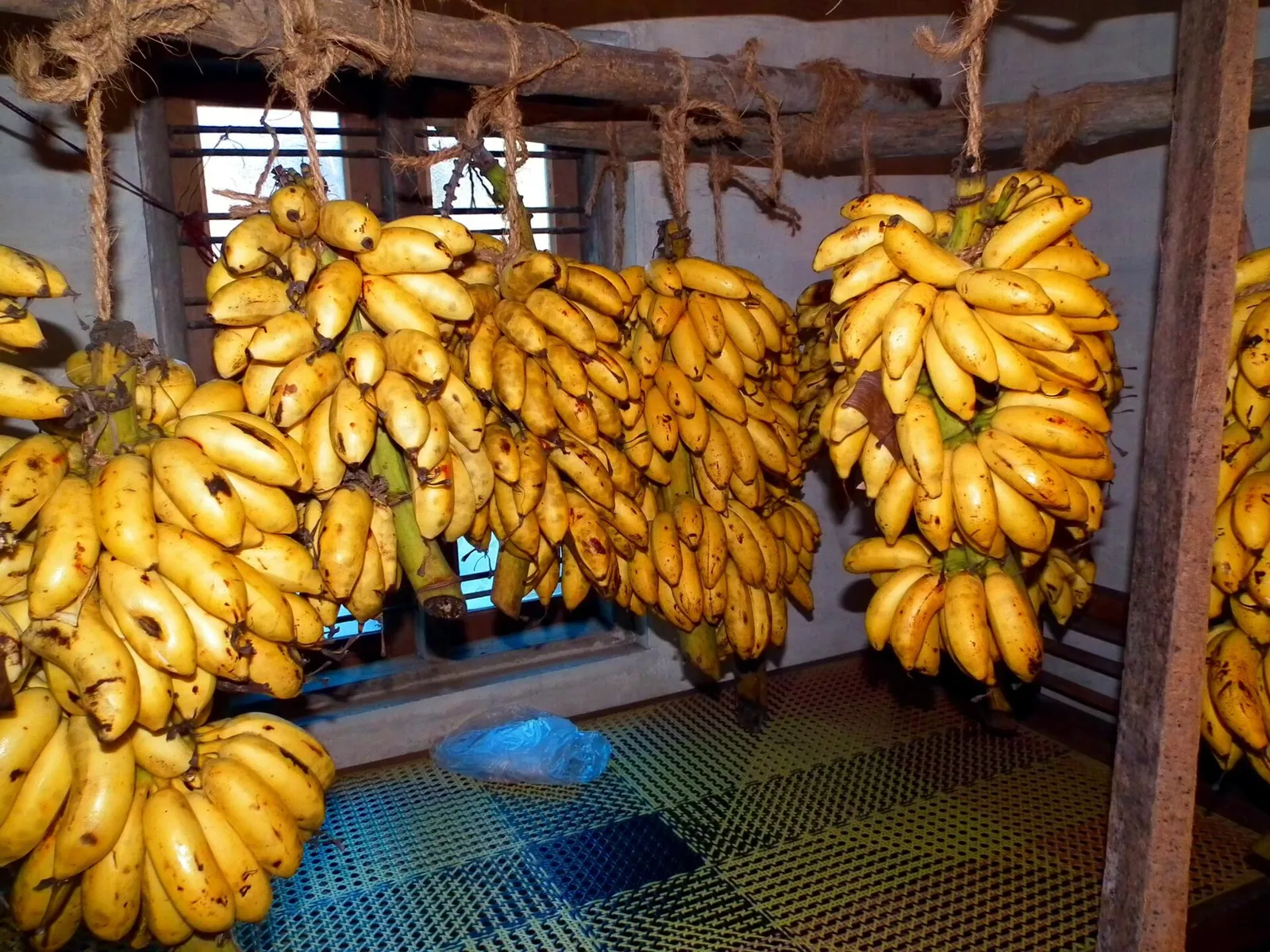
Poovan is the banana of everyday life in Tamil Nadu: medium, cylindrical fingers with thin bright-yellow peel that comes away easily, and soft, juicy, slightly tangy flesh. A single bunch can carry 200 or more fruits, and it is in the shops all year. It is the banana you get with a temple archanai plate or at a wedding, and the one most households keep on the kitchen hook. In Kerala the same type is often called Palayankodan, and its botanical group name is Mysore.
A warning for travellers: banana names do not travel neatly across the border. A shop in Thiruvananthapuram may call a different banana "Poovan" from a shop in Nagercoil. If the name matters, describe the fruit or point at it.
Rasthali, the silk banana, is the one for people who like their bananas fragrant. The fingers are medium and rounded, the peel very thin and quick to bruise, and the flesh sweet and aromatic. It is grown more in Erode and Tiruchirappalli than in Kanyakumari, but Nagercoil fruit shops stock it, and it is often served on the banana leaf at festive meals.
Karpooravalli, Monthan and Robusta
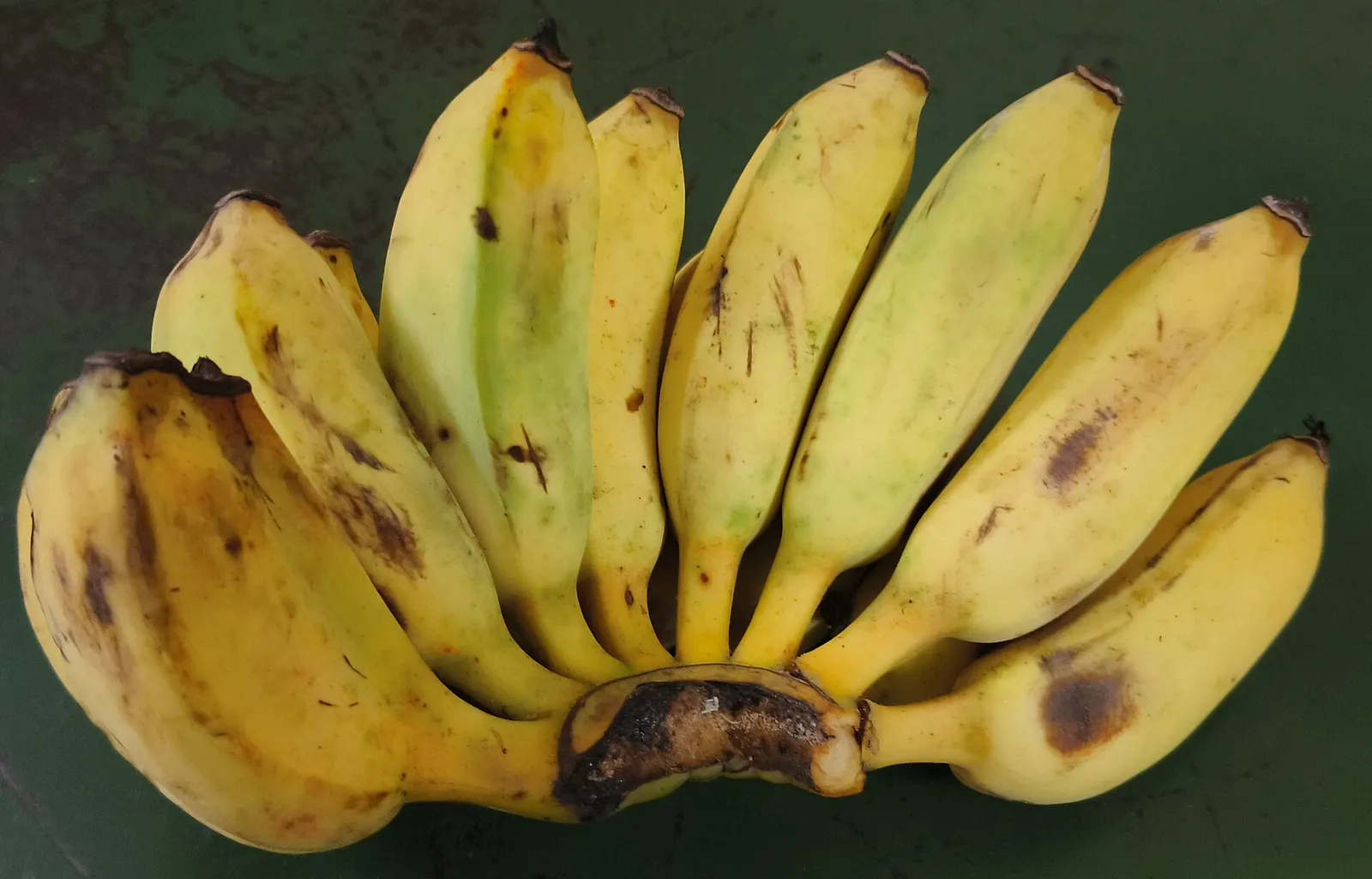
Karpooravalli is grown mainly in central and southern Tamil Nadu and TNAU calls it the sweetest of Indian bananas. Look for stocky, slightly angular fingers with a dusty, ash-grey bloom on the yellow peel. The plant is hardy, and farmers also grow it for its leaves, which brings us to the banana leaf on your plate.
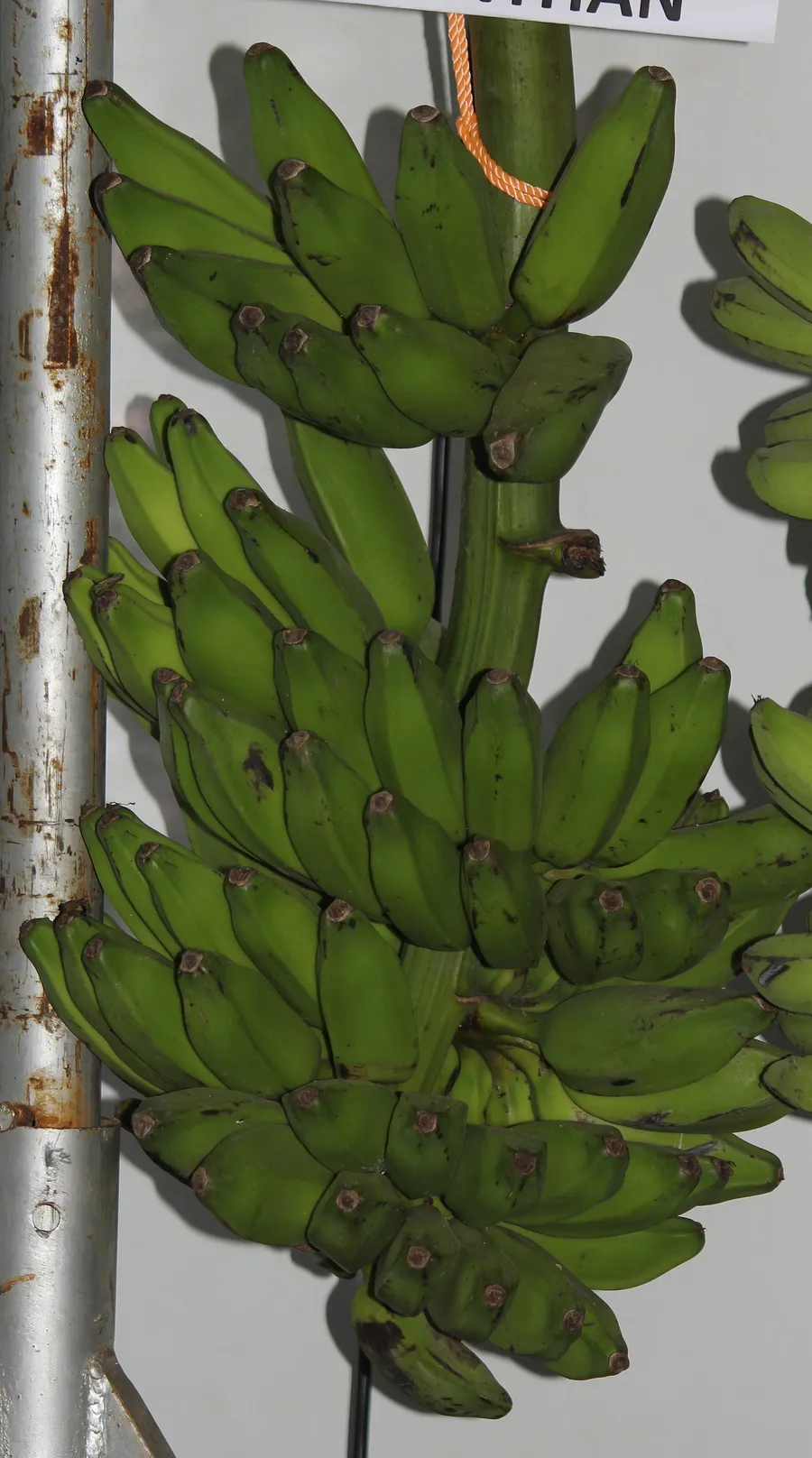
Monthan is the cooking banana most Tamil homes mean when they say vazhaikkai (raw banana). The fingers are big, green, five-sided and tough-skinned, with a pronounced beak at the tip, and the flesh is firm and cream-coloured. It goes into vazhaikkai poriyal, kootu, bajji and the Nanjil Nadu-style avial. "Nattu Monthan" is the country type you will see labelled at farm shows.
Robusta is the Cavendish type grown commercially across India: long, smooth and curved, and sometimes still greenish-yellow when ripe. It is the banana in supermarket trays and juice shops.
Kadali: The Temple Banana
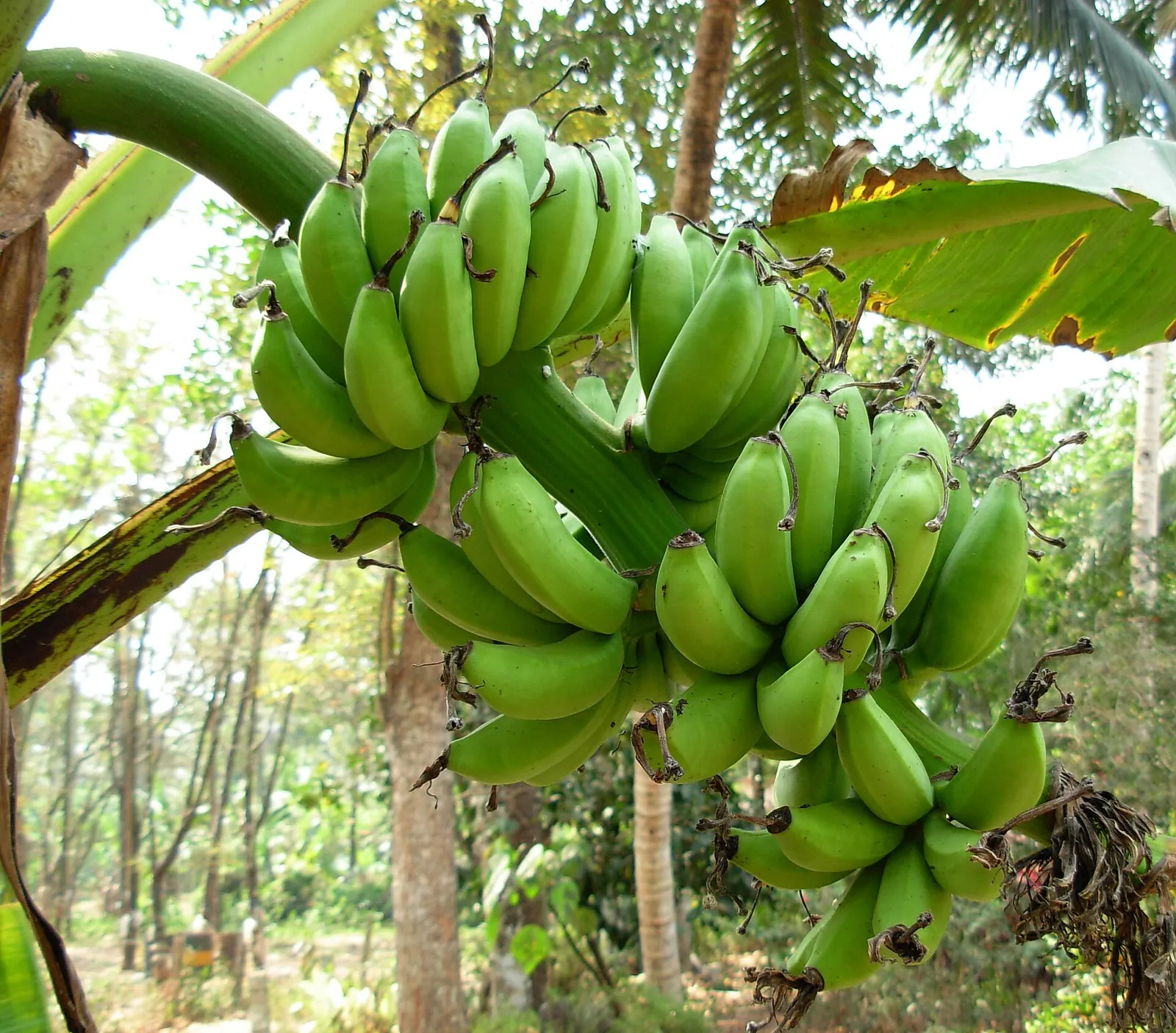
Kadali is a small, plump, rounded banana with thin peel. Kerala Agricultural University researchers note that it is in high demand for temple offerings in Kerala, and you will see it in the same role in the Malayalam-speaking western part of Kanyakumari district, which was part of Travancore until 1956. In the Tamil temples of Nagercoil and Suchindram, Poovan is the more usual offering banana. If you are planning temple visits, our Kanyakumari temple prasadam trail covers what each temple offers.
Which Banana Is Best for Chips, and Why We Only Fry Nendran
The short answer to "which banana is best for chips" is raw, green, fully mature Nendran. The reason is starch against sugar. A raw Nendran is almost all starch and very little free sugar, so a thin slice dries out and crisps in hot oil and turns an even gold. Sweet bananas like Matti, Poovan, Rasthali or Robusta carry more sugar, which caramelises and browns before the slice is dry, and you get a dark, chewy chip. Our Nendran vs regular banana chips article goes into the frying science.
What about other cooking bananas? Monthan and similar types can be fried, and some shops elsewhere in Tamil Nadu do. The chip comes out paler, harder and blander. Nendran's firm, slightly orange flesh gives the colour and the buttery bite people expect from Kanyakumari banana chips.
At RajaGopal Sweet Stall we buy only raw green Nendran, peel it by hand, slice it ultra-thin straight into pure cold-pressed groundnut oil, and season it with salt and turmeric. No preservatives, no colours. Packs are vacuum-sealed and stay crisp for 3–4 weeks. Prices: ₹100 for 250 g, ₹200 for 500 g, ₹400 per kg, ₹1,900 for 5 kg. The full process is on how our banana chips are made, and the product page is Nendran banana chips.
Kanyakumari's Banana, Fried the Old Way
Of all the bananas in the district, only one goes into our kadai: raw Nendran, sliced thin and fried in cold-pressed groundnut oil in Vadasery, Nagercoil, then shipped vacuum-sealed across India.
- ₹100 / 250 g, ₹200 / 500 g, ₹400 / kg, ₹1,900 / 5 kg bulk
- Only Nendran, groundnut oil, salt and turmeric: no preservatives or colours
- Bulk and gifting orders with 24–48 hours notice
 Fried fresh in Vadasery, Nagercoil
Banana Farming in Kanyakumari District
Kanyakumari takes rain from both the south-west and the north-east monsoons and falls in Tamil Nadu's high-rainfall agricultural zone. The whole district was part of Travancore until 1956, and its western taluks, Kalkulam and Vilavancode, still farm much like Kerala: red, lateritic soils, coconut and rubber on the slopes, and bananas in the valleys and paddy edges. TNAU lists Kanyakumari among Tamil Nadu's major banana districts, with Poovan, Karpooravalli and Nendran as its main commercial cultivars, alongside the red banana and the GI-tagged Matti. Area figures vary from year to year and between reports, so we will not quote one, but banana sits among the district's main crops alongside paddy, coconut and rubber.
Most bananas take 11 to 15 months from planting to harvest, and the red banana up to 18 months, so cutting is staggered through the year and there is no single "banana season" in the shops. Nendran supply does dip and prices rise in some months, which is worth knowing if you are ordering chips in bulk for a wedding. For the Nendran side of farming and how locals pick a good bunch, see Nendran bananas of Kanyakumari.
Banana Leaves, Flowers and Stems in Nanjil Nadu Cooking
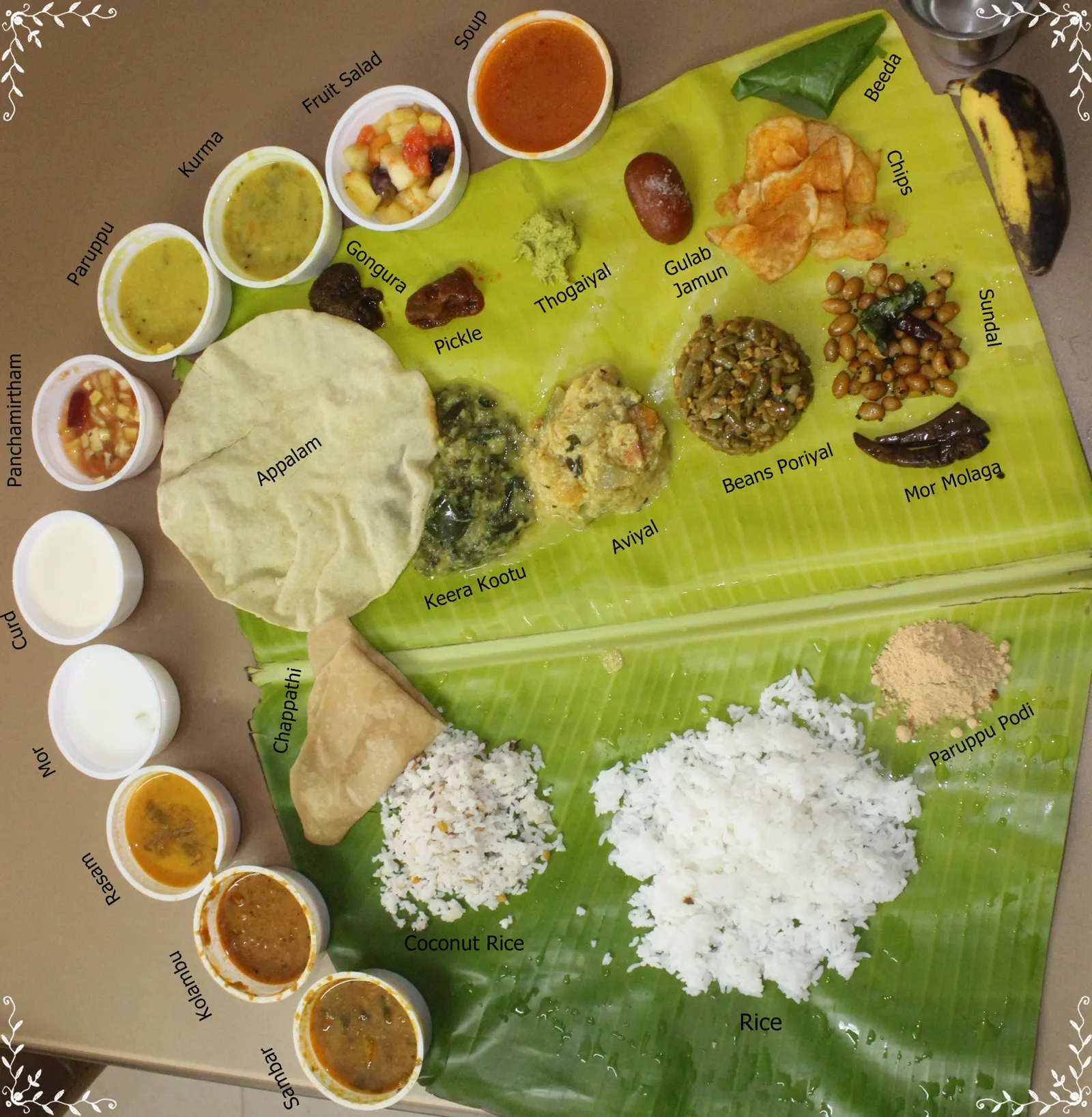
In Kanyakumari nothing on a banana plant is wasted.
- Leaves (vazhai ilai): every wedding feast and festival meal in the district is served on a banana leaf, tip pointing to the guest's left. Hot rice on the leaf releases a faint, grassy aroma that people here say makes the meal taste right. Leaves are also used to wrap ada and other steamed sweets.
- Flower (vazhaipoo): the dark maroon bud is shredded fine for vazhaipoo vadai, vazhaipoo poriyal and thoran. Cleaning it is fiddly (each floret has a tough little stamen to pull out), which is why it is a weekend dish in most homes.
- Stem (vazhaithandu): the tender inner core of the pseudostem is chopped into poriyal, kootu or a cooling raita-like pachadi.
- Raw fruit (vazhaikkai): Monthan and Nendran go into poriyal, avial, erissery and bajji.
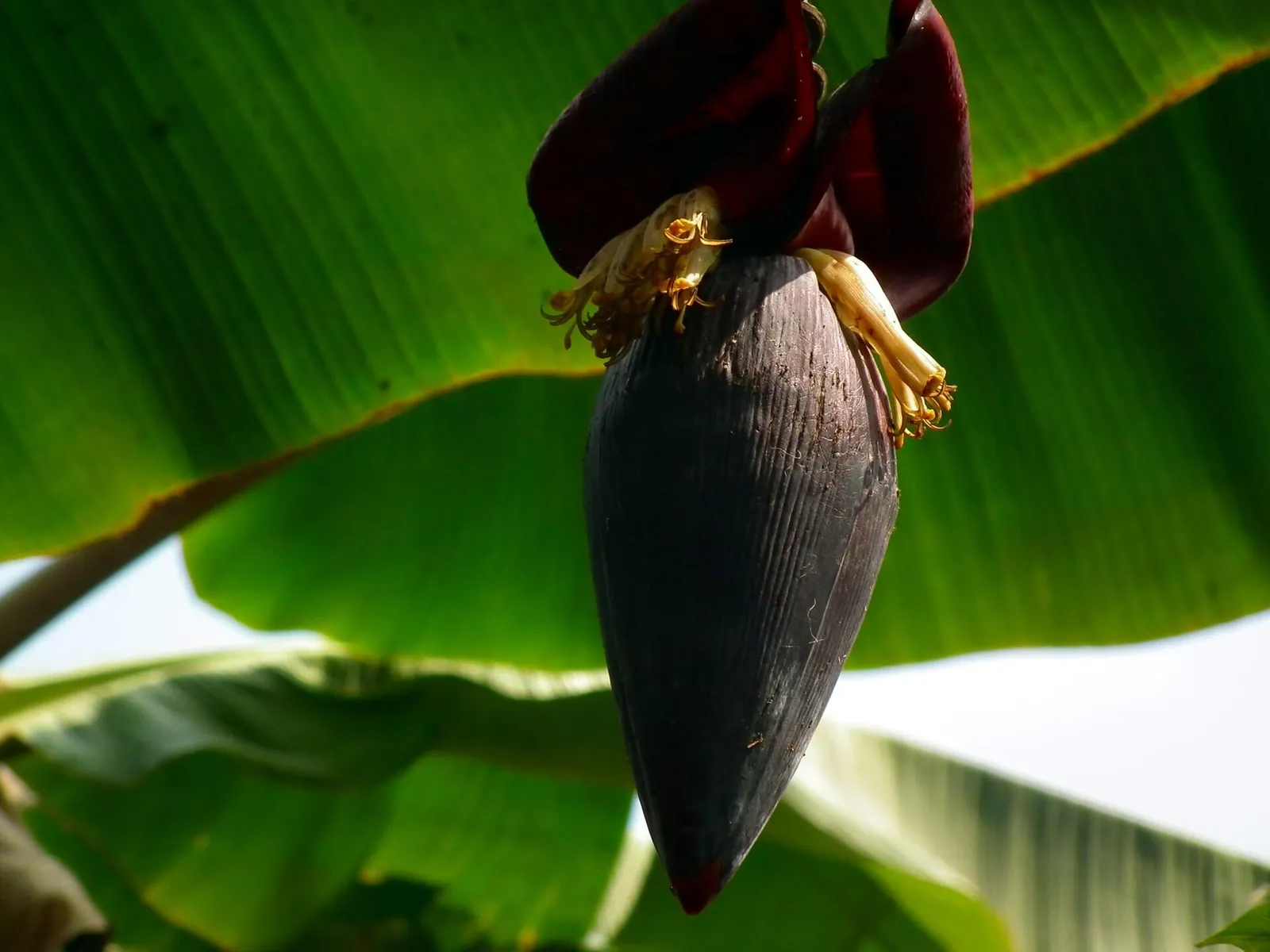
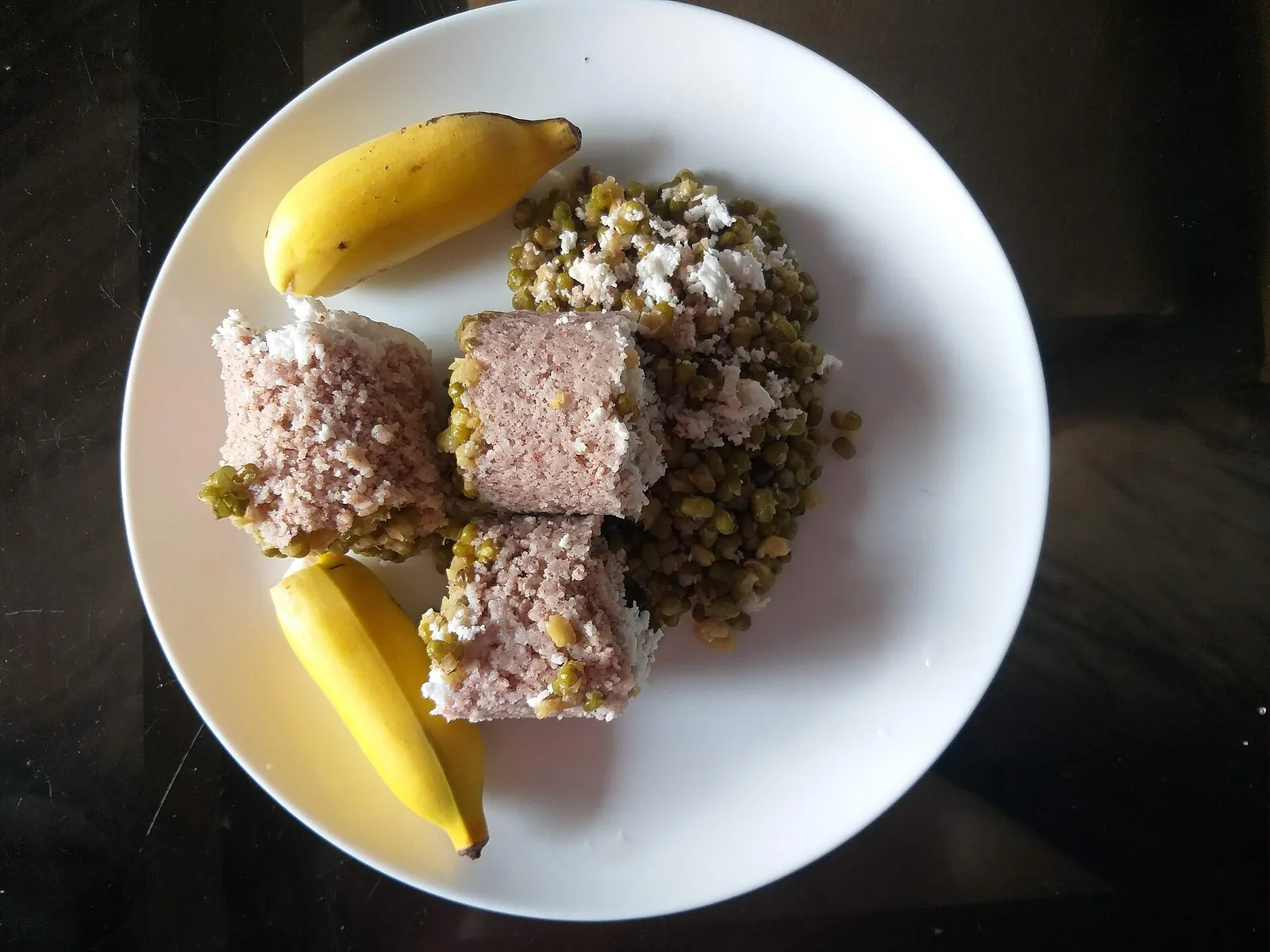
Ripe bananas turn up at breakfast too. Puttu, payaru and pazham (steamed rice puttu with green gram and a banana) is a classic Kanyakumari and Kerala breakfast. For more dishes of the region, see our Nanjil Nadu cuisine guide and the Kanyakumari foodie trail.
Where to See and Buy Bananas in Nagercoil
The easiest place is Vadasery, the old market quarter of Nagercoil, where banana wholesalers stack bunches from early morning. Come before mid-morning to see the most varieties, and ask before photographing a trader's stall. Our Vadasery market history page explains how the market grew. If you want to take bananas home, ripe fruit does not travel well; banana chips do. Our what to buy in Nagercoil guide and Kanyakumari famous snacks list cover the foods that survive a train journey.
Prefer to order from home? Use our buy Nendran banana chips online page, or WhatsApp +91-9790227409 (9 AM to 9 PM, every day).
Frequently Asked Questions
What are the main banana varieties in Kanyakumari?
The bananas you will see most in Kanyakumari district markets are Matti (the district's GI-tagged banana), Nendran, red banana (Sevvazhai), Poovan, Rasthali, Karpooravalli, Monthan (a cooking banana), Robusta and the small Kadali used for temple offerings. Nendran and Monthan are mostly cooked; the rest are eaten ripe.
What is Matti banana?
Matti is a small, slender table banana native to Kanyakumari district, with a pronounced pointed tip, a fragrant aroma and a sweet, slightly tangy, honey-like taste. Its bunches look wind-blown rather than neat. It is low in total soluble solids, which is why it is traditionally fed to babies. Local types include Then Matti (honey) and Semmatti (red-tinged).
When did Kanyakumari Matti banana get its GI tag?
The Geographical Indications Registry in Chennai registered Kanyakumari Matti Banana in 2023 (GI number 757), after an application filed in 2021 by the Kanyakumari Banana and Horticulture Farmers Producer Company. The tag means only Matti bananas grown in Kanyakumari district can be sold under that name.
Which banana is best for chips?
Raw green Nendran is the best banana for chips. It is a starchy plantain with very little free sugar when unripe, so thin slices fry crisp and golden instead of browning and going chewy. Monthan and other cooking bananas can be fried, but give a paler, harder chip. Sweet table bananas like Matti, Poovan or Robusta are not suitable.
How many calories are in Nendran banana per 100g?
Ripe Nendran pulp has roughly 110 to 120 kcal per 100 g, a little more than a typical dessert banana (about 89 kcal), because it is denser and starchier. Figures vary with ripeness and study. Nendran banana chips are much higher because frying adds oil; see our Nendran chips nutrition guide for those numbers.
Does Kumari Snacks sell fresh Matti or red bananas?
No. RajaGopal Sweet Stall does not sell fresh fruit. We use one banana, raw Nendran, and fry it into banana chips in cold-pressed groundnut oil. For fresh Matti, red banana or Poovan, the banana wholesalers and fruit stalls around Vadasery market in Nagercoil are the place to look.
Header photo: Ramesh NG via Wikimedia Commons, CC BY-SA 2.0.
Explore Related Banana Guides
More on Kanyakumari's bananas and what we make from them: