Direct Overview: What Are Authentic Nendran Banana Chips?
Authentic Nendran Banana Chips are paper-thin, golden crisps prepared exclusively from unripe, raw green Nendran plantains (a regional variety cultivated in the red alluvial soil of the Western Ghats border). Unlike mass-market supermarket chips fried in palm oil with artificial yellow dye, genuine artisanal chips are sliced directly into cauldrons of 100% pure cold-pressed groundnut oil and seasoned during frying with a turbulent splash of sea salt and natural Salem turmeric brine. The result is an airy, greaseless crunch with a distinct earthy-sweet plantain finish.
Few snacks in the culinary history of the Indian subcontinent command as devoted a global following as South India's golden Nendran Banana Chips. From transit travelers stepping off trains at Nagercoil Junction to pilgrims visiting the Triveni Sangam in Kanyakumari, carrying home packets of fresh-fried yellow chips is a cherished tradition spanning more than a century.
Yet, the modern snack market is flooded with industrial imitations: thick, hard chips fried in stale hydrogenated palm fats, coated in artificial tartrazine dyes, and stale before you even break the seal. At RajaGopal Sweet Stall, our family has been frying Nendran plantains on Asambu Road in Vadasery since 1965. This definitive guide reveals the agronomy, chemistry, and culinary craft behind true artisanal banana chips.
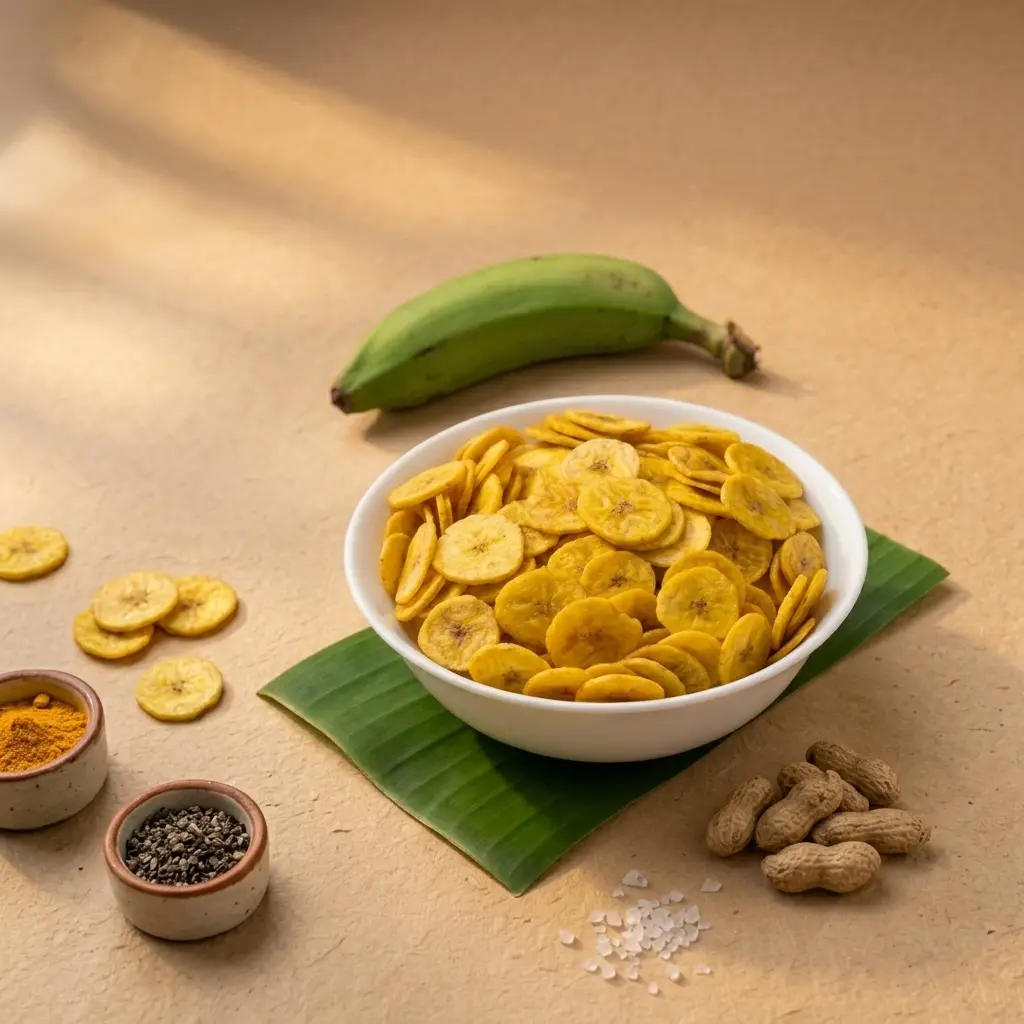
Crisp, golden Nendran chips: Sliced paper-thin from green plantains and fried in cold-pressed groundnut oil.
The Botany of Nendran: Why Regular Bananas Fail for Chips
Many visitors ask why chips cannot be made from everyday table bananas like Cavendish, Robusta, or Poovan. The answer lies in plant biochemistry:
- Resistant Starch Content: Raw green Nendran bananas contain exceptionally dense concentrations of long-chain amylose starches. When exposed to boiling oil, this starch rapidly dehydrates into a rigid, micro-porous cellular lattice, producing an intensely brittle crunch. Regular dessert bananas contain high free moisture and simple sugars that caramelize too quickly, turning brown, chewy, and soggy.
- The Terroir of Kanyakumari & South Kerala: The southern slope of the Western Ghats receives dual monsoons (Southwest and Northeast), creating fertile, well-drained red loam rich in natural iron and potassium. Farms along the Pazhayar river basin and Thovalai produce raw Nendran bunches with dense pulp and minimal seed cavities, perfectly calibrated for uniform slicing. Learn more in our guide to Nendran Bananas of Kanyakumari.
- The Ripeness Window: Harvesting at the exact stage of mature greenness is an artisan skill. If harvested 3 days too early, the chip tastes chalky and bland. If harvested 2 days too late (as starch begins converting into fructose), the chips turn limp, brown, and unpleasantly sweet in the oil.
The 5-Point Authenticity Test: Real vs. Adulterated Chips
How to Spot Genuine Artisanal Nendran Chips
1. The Finger-Touch Test: Place a chip between your thumb and forefinger and press. Genuine groundnut oil chips snap instantly with a sharp crack and leave your fingertips completely dry. Palm oil chips leave a slippery, glossy grease film.
2. The Translucency Test: Hold a chip up to the light. Premium artisanal chips are sliced ultra-thin (1.2mm to 1.5mm) and appear semi-translucent like stained glass. Cheap commercial chips are thick (over 2.5mm) and completely opaque.
3. The Palate Melting Test: Chew a handful. Pure cold-pressed oil chips dissolve cleanly on the tongue without coating the roof of your mouth. Commercial hydrogenated oil leaves an unctuous, waxy layer that requires hot tea to wash away.
4. The Color Test: Look closely at the yellow shade. Natural chips seasoned with real turmeric have an earthy, pale-golden hue with subtle green undertones along the peel rim. Neon-yellow chips almost always use artificial synthetic food colorings (Tartrazine or Sunset Yellow).
5. The Aroma Test: Open the packet and inhale deeply. You should smell the clean, sweet, nutty warmth of toasted groundnuts and fresh plantain. Any hint of rancidity, paint-like sharpness, or stale oil indicates old, reused commercial fat.
The Master Frying Technique: The Brine Splash Physics
The hallmark of genuine Vadasery craftsmanship is slicing the green plantains directly over the boiling cauldron of oil using a specialized handheld wooden mandoline slicer (Chipping Palagai). This ensures that the slices never clump together or oxidize in the air before hitting the heat.
However, the most thrilling moment of the frying cycle is the Turmeric-Salt Brine Splash:
- When the chips have lost approximately 80% of their internal moisture in the 185°C oil, the fry master dips a stainless steel ladle into a saturated solution of pure sea salt and powdered Salem turmeric dissolved in water.
- With a swift flick of the wrist, he splatters the brine across the boiling surface.
- The contact of cold water with smoking oil creates an explosive, roaring sizzle ("churrrr") as thousands of steam bubbles erupt across the kadai.
- This steam micro-pressure forces the dissolved salt and natural turmeric deep into the open cellular pores of the hot chips. Unlike post-frying dry salting, this method guarantees that every single millimeter of the chip is seasoned with absolute mathematical uniformity.
| Comparison Parameter | RajaGopal Sweet Stall (Nagercoil) | Kerala Style Banana Chips | Commercial Supermarket Brands |
|---|---|---|---|
| Frying Medium | 100% Pure Cold-Pressed Groundnut Oil | Fresh Coconut Oil (Velichenna) | Refined Palm Olein / Cottonseed Oil |
| Aroma Profile | Mild, nutty, highlighting pure plantain flavor | Strong, pungent, rich toasted coconut scent | Neutral to stale, chemically deodorized |
| Slice Thickness | Ultra-thin (1.2mm - 1.4mm) for airy snap | Medium-thick (1.8mm - 2.2mm) robust bite | Irregular, often thick and chalky |
| Palate Feel | Dry, light, zero greasy coating | Rich, velvety, distinct coconut finish | Heavy, waxy, lingers on the tongue |
| Shelf Life Stability | 30 to 45 days in vacuum seal without degradation | 15 to 20 days (coconut oil oxidizes faster) | 6 months (due to synthetic TBHQ preservatives) |
For an exhaustive deep-dive comparing these regional traditions, read our dedicated guide: Kerala vs Nagercoil Banana Chips.
Varieties of Nendran Chips at Kumari Snacks
While the classic round yellow salted chip is our crown jewel, traditional South Indian snacking celebrates multiple distinct cuts and spice coatings:
- Classic Round Salted Chips: The timeless icon. Thin golden discs seasoned purely with rock salt and organic turmeric.
- Four-Cut Long Finger Chips (Neela Chips): The plantain is slit lengthwise into four quarters and sliced into long golden sticks. The thicker cut delivers an intensely robust, hearty crunch ideal for dipping into spicy coconut chutneys.
- Malabar Crushed Black Pepper Chips: Freshly fried chips tossed warm with coarse Tellicherry black pepper and a touch of roasted rock salt. A spicy, warming savory perfect for winter evenings and rainy days.
Explore More Culinary Resources
- Banana Chips in Vadasery: The historic market street where our cauldrons have simmered since 1965.
- Banana Chips in Nagercoil: Why travelers stop here to stock up on edible souvenirs.
- Buy Nendran Banana Chips Online: Direct ordering guide with vacuum pack shipping across India.
- Health Benefits & Nutrition of Nendran Chips: Resistant starch, clean fats, and dietary data.
- Top 5 Traditional South Indian Crispy Snacks: The master tea-time companion.
Order Pristine, Fresh-Fried Nendran Banana Chips Online
Taste the unmatched, non-greasy crunch of genuine Kanyakumari Nendran chips, sliced directly over boiling cold-pressed groundnut oil. Packaged in multi-layer vacuum barrier pouches and shipped across India within 24 hours of frying.