Quick Answer: Is Kerala Halwa Available in Nagercoil?
Nagercoil's halwa is a close cousin of Kerala's, not a copy. Kanyakumari was part of Travancore until 1 November 1956, so it shares Kerala's sweet culture, but our wheat halwa follows the Tirunelveli method: fermented wheat starch, pure cow ghee and brass urulis. Find it at RajaGopal Sweet Stall, Vadasery, at ₹160 per 250 g in 2026, or order on WhatsApp.
People searching for "Kerala halwa near me" in Nagercoil are usually asking two things at once: where can I find the halwa I remember from Kozhikode, and is the halwa sold in Kanyakumari district anything like it? The honest answer is "related, but not identical", and the reason is geography. This guide focuses on the Kerala and Kozhikode connection. For the Tamil Nadu side of the story, see Nagercoil halwa vs Tirunelveli halwa and the history of halwa in South Tamil Nadu; we will not repeat them here.
One clarification before we go on. The halwa we make at RajaGopal Sweet Stall in Vadasery is a Tamil-style wheat halwa cooked in pure cow ghee. We do not make the brightly coloured, coconut-oil slabs of Kozhikode, and we would rather say so than pretend. What we can offer is the nearest relative of that sweet in Nagercoil, and an explanation of the family tree.
Kerala Halwa in Nagercoil: A Border District with a Kerala Past
Kanyakumari district was part of the princely state of Travancore for centuries. After Independence, Travancore merged into Travancore-Cochin. Under the States Reorganisation Act, four Tamil-speaking taluks (Agastheeswaram, Thovalai, Kalkulam and Vilavancode) were transferred to Madras State on 1 November 1956 and now form Kanyakumari district. The movement for that merger was led by M. A. Nesamony.
That history is why Nagercoil still feels like a meeting point. Malayalam is widely understood, Onam and Vishu are familiar, and the food, from banana chips fried in the Kerala manner to the wheat halwa we are talking about, grew up in the same Travancore kitchens. Our guide to the flavours of Nanjilnadu and the story of Cape Comorin then and now show how deep that overlap goes.
Kozhikode Halwa and Mittai Theruvu: What the Records Say
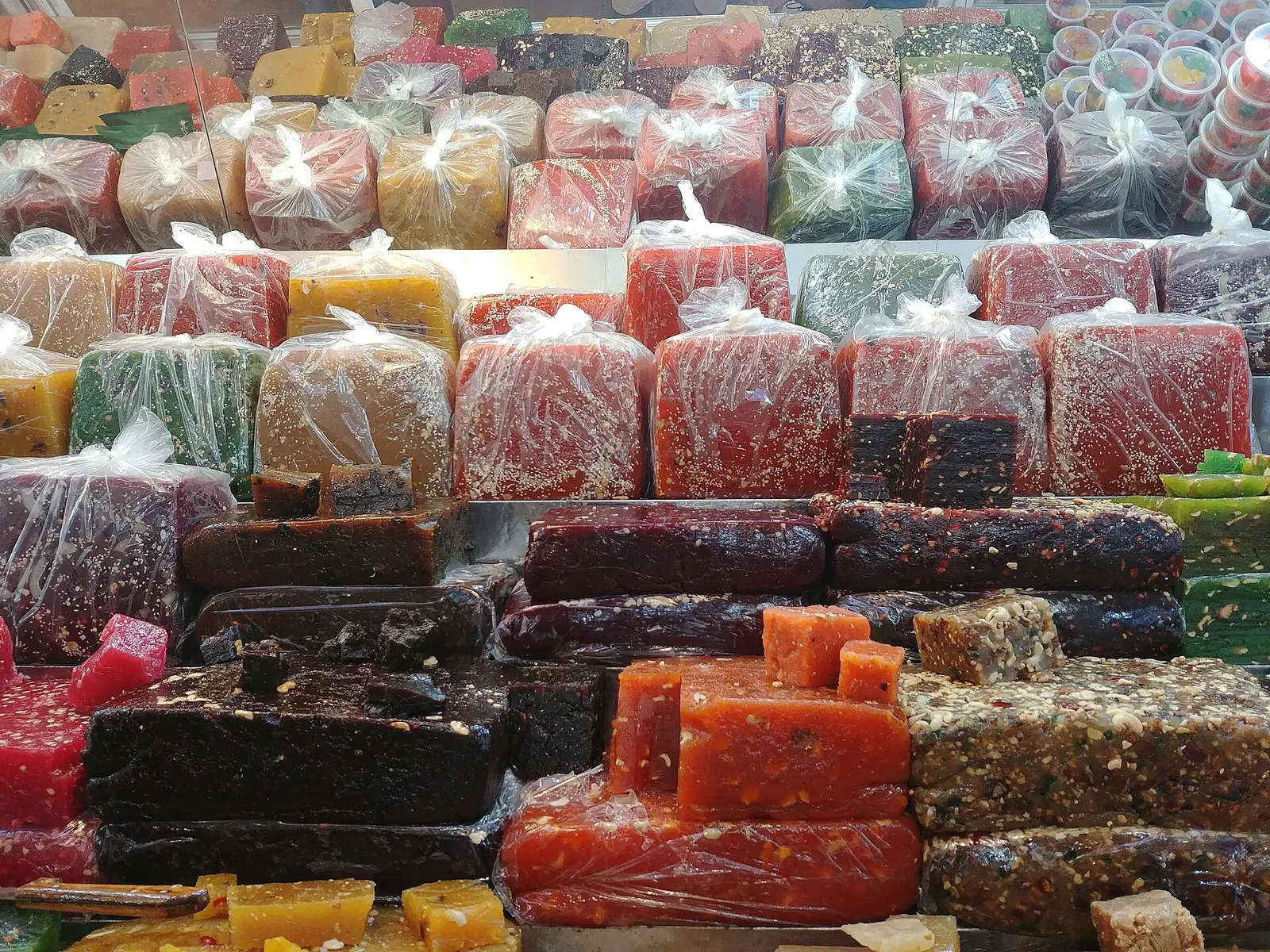
Kozhikode (Calicut) is the heart of Kerala halwa. The famous lane is S. M. Street, known in Malayalam as Mittai Theruvu, the "sweet street". The "S. M." is commonly explained as "Sweetmeat", a name said to have come from European traders who called halwa sweetmeat. A second, equally popular version credits the writer S. K. Pottekkatt with the idea that the British saw the red halwa as resembling a cut of meat.
The origin of the sweet is less settled. One popular account says Gujarati sweet-makers and traders settled in the area; another tells of the Zamorin inviting cooks from Gujarat for a royal feast. Both are widely repeated but are traditions rather than documented fact, and estimates of how old the street is range from roughly five to six hundred years. We mention the stories because they explain why Kozhikode halwa looks so different from ours: it comes from a trading port with Gujarati, Arab and Parsi influences, not from a wheat-growing river valley.
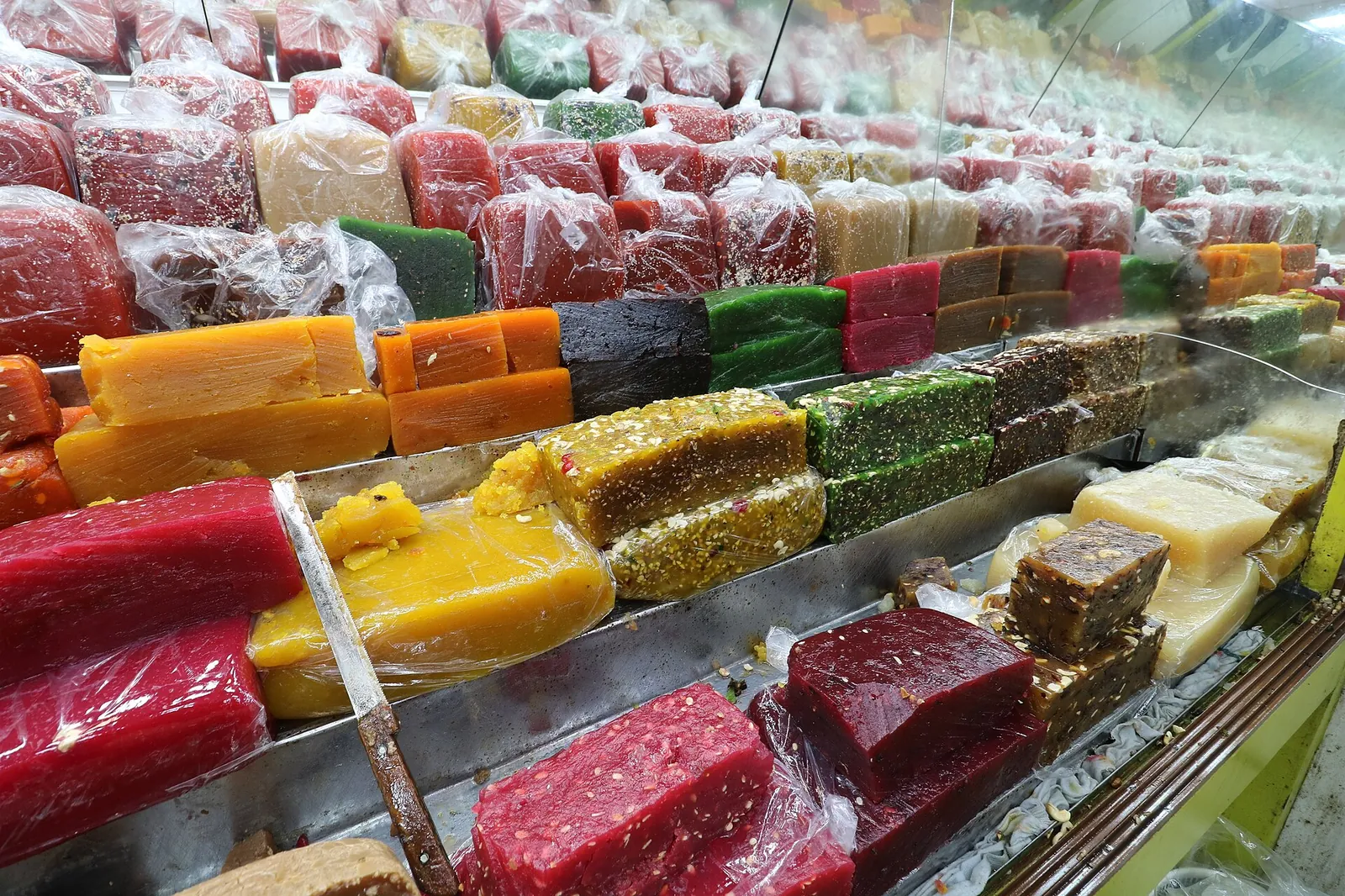
What you taste on that street is typically a firm, sliceable halwa in several colours, with a black version (karutha halwa) made with jaggery and cooked in coconut oil, and the red, green and yellow slabs, often studded with nuts.
Tirunelveli Halwa: The Tamil Nadu Reference Point
Across the district border to the north-east lies Tirunelveli, where wheat halwa is made from the "milk" of soaked wheat and cooked with sugar and ghee. The best-known name is Iruttu Kadai ("dark shop"), which published accounts date to 1900. A separate account says a Rajput cook family had opened Tirunelveli's first halwa shop around 1882. Locals also credit the water of the Thamirabarani river for the taste, a belief that is more folklore than food science.
This is the Tamil reference point for halwa. It is soft, dark and glossy, a very different sweet from the Kozhikode slab.
Where Nagercoil Wheat Halwa Sits Between the Two
Nagercoil's halwa follows the Tirunelveli technique (wheat milk, slow cooking, ghee) but carries two Travancore habits: a deeper dependence on ghee and cashews, and a firmer, more elastic finish that holds together on a plate. In our kitchen, the choices that shape it are:
- Ghee, not oil: pure cow ghee is added ladle by ladle during the long cook.
- Fermented wheat starch: soaked red wheat is crushed for its milk, which rests and ferments slightly. That gives the faint tang under the sweetness.
- Brass urulis: heavy brass holds heat evenly and gives the mahogany colour.
- Colour from sugar only: no added colour. Kerala's red and green are a different tradition.
Kozhikode Halwa vs Tirunelveli Halwa vs Nagercoil Halwa
People often search "Kozhikode halwa vs Tirunelveli halwa", so here is a side-by-side that includes Nagercoil. Kerala and Tirunelveli details vary from shop to shop; treat them as typical, not universal.
| Feature | Kozhikode (Calicut) halwa | Nagercoil wheat halwa (our shop) | Tirunelveli halwa |
|---|---|---|---|
| Main fat | Coconut oil in many traditional versions; ghee versions also sold | Pure cow ghee | Ghee (varies by shop) |
| Base | Refined wheat flour or starch with sugar or jaggery | Fermented milk of soaked red wheat | Wheat milk from soaked wheat |
| Colour | Red, yellow, green; black from jaggery | Deep amber to mahogany (caramelised sugar only) | Dark amber to brown |
| Texture | Firm, sliceable, jelly-like slabs | Glossy, stretchy, translucent | Soft, slick, very smooth |
| Typical shelf life | Several weeks, varies by shop | 15–20 days at room temperature | About 12–15 days, per shop |
| Famous street | Mittai Theruvu (S. M. Street), Kozhikode | Vadasery and Asambu Road, Nagercoil | Near Nellaiappar Temple; Iruttu Kadai |
In short: if you grew up on Kozhikode's firm, colourful slabs, Nagercoil's stretchy ghee halwa will taste richer and softer. If you know Tirunelveli's slick halwa, ours is slightly firmer and more nutty. Neither is "better"; they answer different cravings.
How to Find Kerala-Style Halwa Near You in Nagercoil
If you want the real Kozhikode slab, the dependable sources are Kozhikode's own shops or Kerala's sweet streets. If you want the halwa of this region, you can find it in Nagercoil, and at our counter in particular:
- Where: RajaGopal Sweet Stall, Asambu Road, Vadasery, Nagercoil 629001 – open 9 AM to 9 PM every day.
- What: pure cow ghee wheat halwa with cashews, ₹160 per 250 g and ₹640 per kg in 2026.
- How to judge: a glossy stretch, a mahogany shade and a rim of ghee. Our Nagercoil famous sweets guide has the full counter checklist.
What to Expect When You Taste Nagercoil Halwa After Kozhikode Halwa
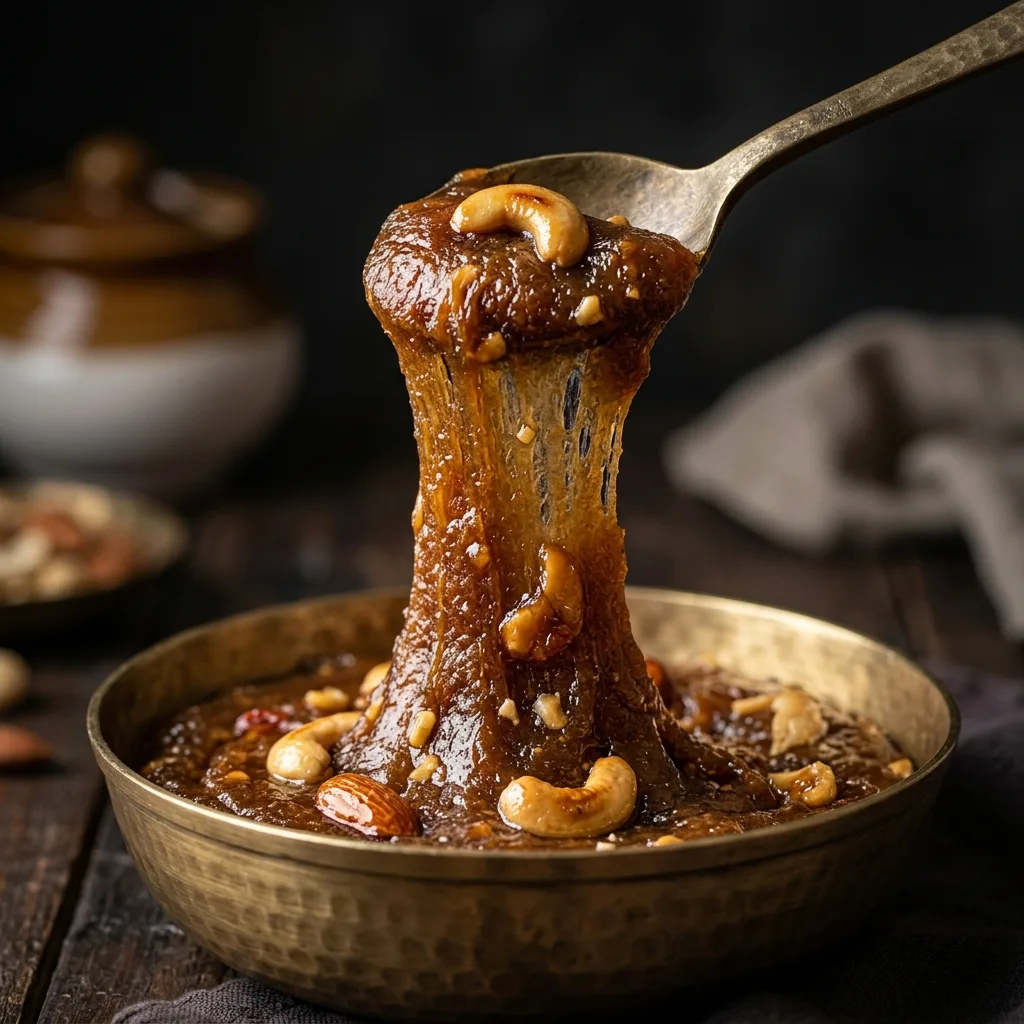
If your reference is Kozhikode, adjust three expectations. First, the sweetness is rounder and slower: caramelised sugar and ghee, rather than the sharper sweetness of jaggery or coconut oil. Second, the bite is elastic rather than jelly-like; lift a spoon and the halwa stretches before breaking. Third, there is no coconut note at all. Cashews and ghee carry the flavour, which is why many Kerala visitors treat it as a different sweet that happens to share a name.
If you are driving through Nagercoil on the way to or from Kanyakumari, a sealed 250 g or 500 g pack is easy to carry home and share.
Buying and Shipping Halwa from Nagercoil
Halwa is the best-travelled sweet in the district. Packed in a sealed box and kept out of the heat, it stays good for 15–20 days, as described in our shelf-life guide. A few practical notes:
- We ship in sealed packs by courier across India. Tell us your city on WhatsApp and we will confirm cost and timing.
- Order 24–48 hours ahead for gift boxes and weddings, longer for large quantities.
- For Kerala addresses, plan the arrival before a festival such as Onam or Vishu, and let us know the delivery date so the sweet is fresh.
- For ideas on pairing halwa in a gift box, see the food gifts guide.
Sweets are only part of the kitchen. The traditional sweets of Kanyakumari and the full sweets range cover the rest, and our story since 1965 explains who is behind the urulis.
Order Nagercoil Halwa on WhatsApp
Craving a Kerala-style halwa experience? Order our ghee wheat halwa and we will pack it for your city.
- Pure cow ghee, fermented wheat starch, cashews
- No preservatives and no artificial colour
- ₹160 per 250 g, ₹640 per kg (2026)
- Shipped across India in sealed packs
 Ghee wheat halwa, Vadasery
Frequently Asked Questions
Is there Kerala halwa in Nagercoil?
Nagercoil's halwa is a Tamil-style wheat halwa, closely related to Kerala and Tirunelveli halwa through the shared Travancore sweet tradition. It is made with ghee, not the coconut-oil, brightly coloured slabs of Kozhikode. RajaGopal Sweet Stall, Asambu Road, Vadasery, sells the ghee version at ₹160 per 250 g in 2026.
Why does Kanyakumari halwa resemble Kerala halwa?
Kanyakumari district was part of Travancore until four Tamil-speaking taluks joined Madras State on 1 November 1956, so its sweet culture developed alongside Kerala's. The cooking method itself is closer to Tirunelveli's wheat halwa.
What is the difference between Kozhikode halwa and Tirunelveli halwa?
Kozhikode halwa is typically firm, sliceable and often coloured, made with refined flour and frequently coconut oil. Tirunelveli halwa is soft and glossy, made from wheat milk and ghee. Nagercoil's version sits in between: stretchy and ghee-rich.
What is Mittai Theruvu in Kozhikode?
Mittai Theruvu, or S. M. (Sweetmeat) Street, is the lane in Kozhikode known for halwa shops. The name is commonly explained as European traders calling halwa sweetmeat; origin stories involving Gujarati sweet-makers are traditions rather than documented history.
Where can I buy halwa near me in Nagercoil?
Visit RajaGopal Sweet Stall on Asambu Road, Vadasery, open 9 AM to 9 PM daily, or order via WhatsApp on +91-9790227409. Check the halwa is glossy, stretchy and amber, never bright red.
How long does Nagercoil halwa last?
Our ghee wheat halwa keeps 15–20 days at room temperature in a sealed container away from heat. We make it without preservatives, so freshness is the reason to eat it within that window.
Header photo: Abilngeorge via Wikimedia Commons, CC BY-SA 4.0.
Explore Related Guides & Delicacies
- Nagercoil Wheat Halwa: Buy the Ghee Original
- Nagercoil Halwa vs Tirunelveli Halwa
- History of Halwa in South Tamil Nadu
- Nagercoil Famous Sweets: What to Buy & Where
- Traditional Sweets of Kanyakumari
- The Flavors of Nanjilnadu: Kanyakumari Food Guide
- Cape Comorin Then and Now
- Best Food Gifts to Buy in Nagercoil