Ask anyone from the two southernmost districts of Tamil Nadu to name the sweet of their homeland and the answer comes back without hesitation: halwa. Not the bright, jelly-like halwa of northern sweet counters, but a dark amber, glossy, ghee-heavy wheat halwa that stretches when you lift a spoon of it. It belongs to a narrow belt of the deep south running from Tirunelveli down through Nagercoil to the Cape, and its story — part history, part legend — is worth telling properly.
The Halwa Belt of the Deep South
Wheat is not a southern crop, which makes the region's obsession with wheat halwa an oddity worth explaining. The sweet took root in towns along the old trade routes of the Tirunelveli region in the nineteenth century, and from there followed families, weddings, and market roads southwards into what is now Kanyakumari district. Today the belt behaves like a single halwa country: the technique, the colour, and the standards are the same whether the kadai is simmering in Tirunelveli town or in the Vadasery market of Nagercoil.
The Tirunelveli Legend: Iruttukadai & the River Story
Every food tradition earns a legend, and Tirunelveli halwa has two. The first is the origin account: sweet-makers who migrated from the north — Rajput cooks, by the most repeated telling — settled in Tirunelveli in the late 1800s and adapted their wheat halwa to local taste. The second is the river story: locals insist the halwa owes its character to the water of the Thamirabarani, the "copper-tinted" river that flows past the town, and no shop on its banks has ever been in a hurry to deny it.
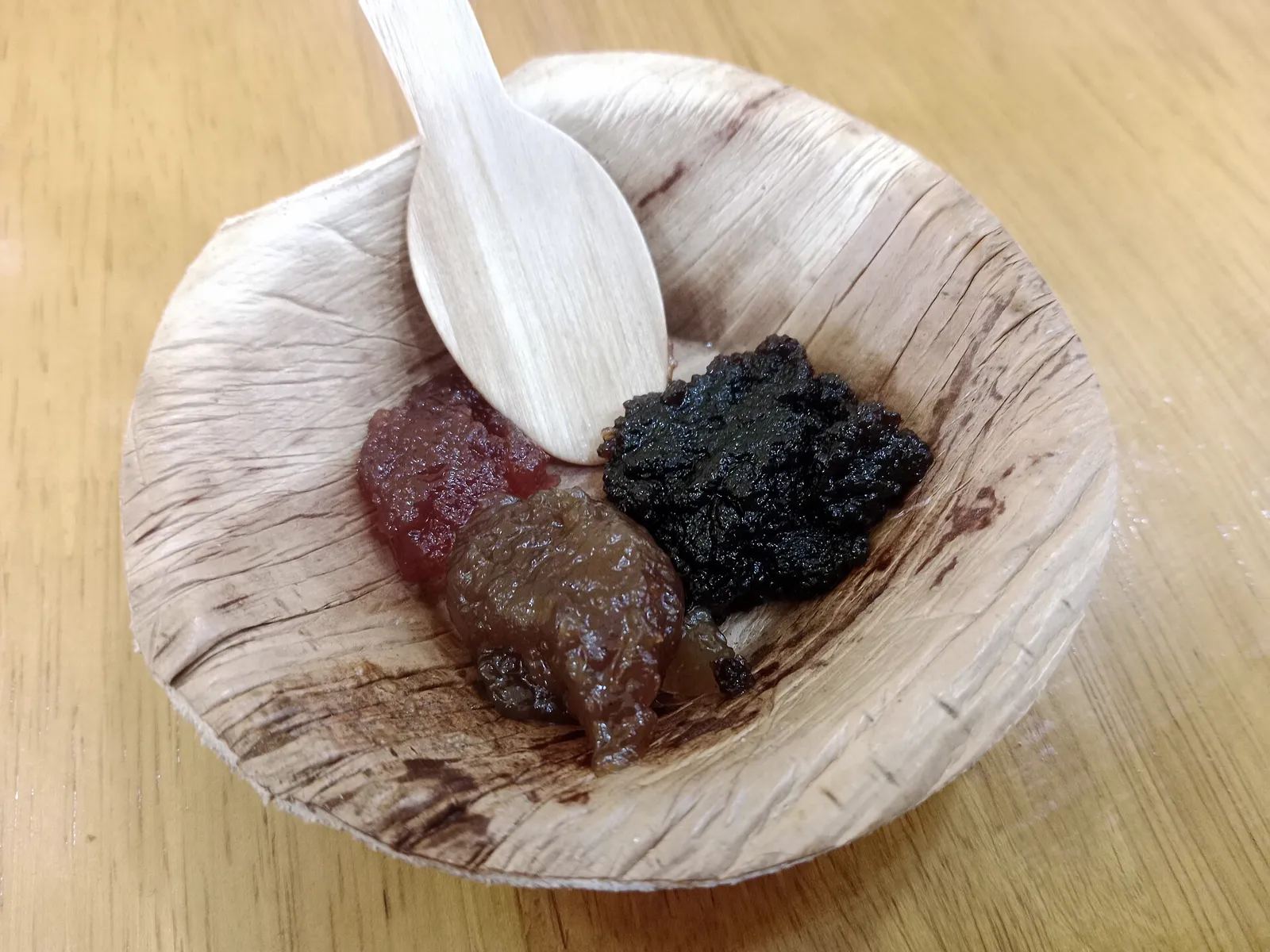
The institution that fixed the sweet's fame is Iruttukadai — literally the "dark shop" — which began selling halwa around 1900 near the Nellaiappar Temple. It opens only in the evening, burns almost no light, offers no branding and no variety, and still sells out. Generations of the deep south have grown up on the idea that the best halwa needs no signboard, only patience and a queue.
How Halwa Travelled South to Kanyakumari
Nagercoil sits barely eighty kilometres from Tirunelveli, and the two towns have always traded people as freely as goods — brides, merchants, temple pilgrims, and sweet-makers among them. As Nagercoil's market centre grew through the twentieth century, halwa came with them and settled into the district's own celebration calendar. In Kanyakumari district it joined a sweet culture already rich with laddu and jalebi, and found its particular role: the sweet you carry. Visitors leaving the Cape, families sending boxes to relatives in Chennai, pilgrims heading home — halwa, dense and long-keeping, became the district's travelling ambassador. It remains the anchor of every festival order, especially during Diwali in Nagercoil, when halwa and laddu boxes cross the district by the thousand.
What Makes Southern Wheat Halwa Different
The recipe is disarmingly short: wheat, sugar, ghee. The technique is anything but. Samba wheat is soaked overnight, ground, and squeezed for its "milk", which is left to rest and slightly ferment. That wheat milk is then cooked with sugar syrup over a steady flame while ghee goes in ladle by ladle — a process of continuous stirring that runs for hours and cannot be rushed. Get it right and the starch turns translucent, the sugar caramelises to a deep amber, and the halwa develops its signature glassy shine and elastic pull. Rushed halwa announces itself instantly: grainy, pale, and greasy instead of glossy. That is the whole difference between the southern wheat halwa and most of what is sold under the same name elsewhere.
Judging a Good Halwa
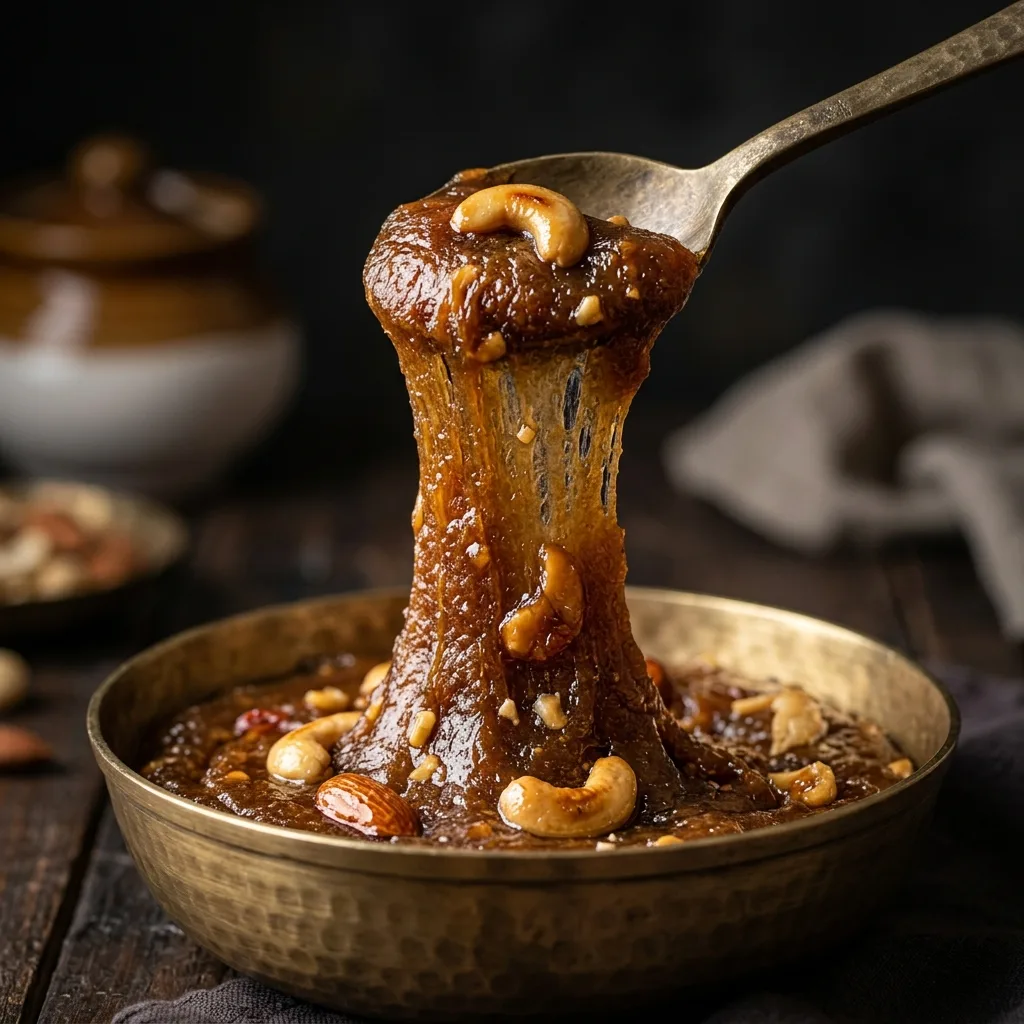
Locals judge halwa in three moves. Look first: it should be a deep, even amber with a wet shine, never dull or artificially bright. Lift next: a spoonful should stretch and fold, not crumble or slump. Then taste: ghee should arrive as aroma, not as an oily film, and the sweetness should finish clean. Our own kitchen has cooked wheat halwa in Nagercoil this slow way since 1965, in pure ghee and small batches, and it sits alongside the laddu and mysore pak in our traditional sweets counter — the same standards the whole belt swears by. For where halwa fits among the district's other classics, see our guide to the traditional sweets of Kanyakumari.
Frequently Asked Questions
Where did Tirunelveli halwa originate?
The popular account credits sweet-makers who migrated from north India to Tirunelveli in the late 1800s, bringing a wheat halwa recipe that local cooks perfected using Thamirabarani river water. The famous Iruttukadai — the 'dark shop' that opened around 1900 and still sells halwa only in the evening — turned the sweet into a regional institution.
What is south Tamil Nadu halwa made of?
Just three core ingredients: wheat milk (extracted from soaked and ground samba wheat), sugar, and generous pure ghee. The wheat milk is cooked slowly with sugar syrup for hours, with ghee added in stages until the halwa turns glossy, dark amber, and stretchy. No colouring or gelatin belongs in a traditional batch.
Where can I buy traditional halwa in Nagercoil?
The Vadasery market area is Nagercoil's sweet centre. Our family shop, RajaGopal Sweet Stall on Asambu Road, Vadasery, has slow-cooked wheat halwa in pure ghee since 1965, and through Kumari Snacks we courier it to Chennai, Bangalore, and other cities — order on WhatsApp at +91-9790227409.
Taste the Halwa Belt's Standard
Slow-cooked wheat halwa from our Vadasery kitchen — visit us on Asambu Road or have it couriered to your city.
Call Now Order on WhatsApp