Direct Overview: Best Time to Visit Kanyakumari
The overall best time to visit Kanyakumari is between October and March (Winter Season). During these months, daytime temperatures range comfortably between 22°C and 30°C, rainfall is minimal, and calm sea waters ensure uninterrupted ferry services to the Vivekananda Rock Memorial. December is the premier month for cultural travelers due to major temple car festivals and clear winter sunrises.
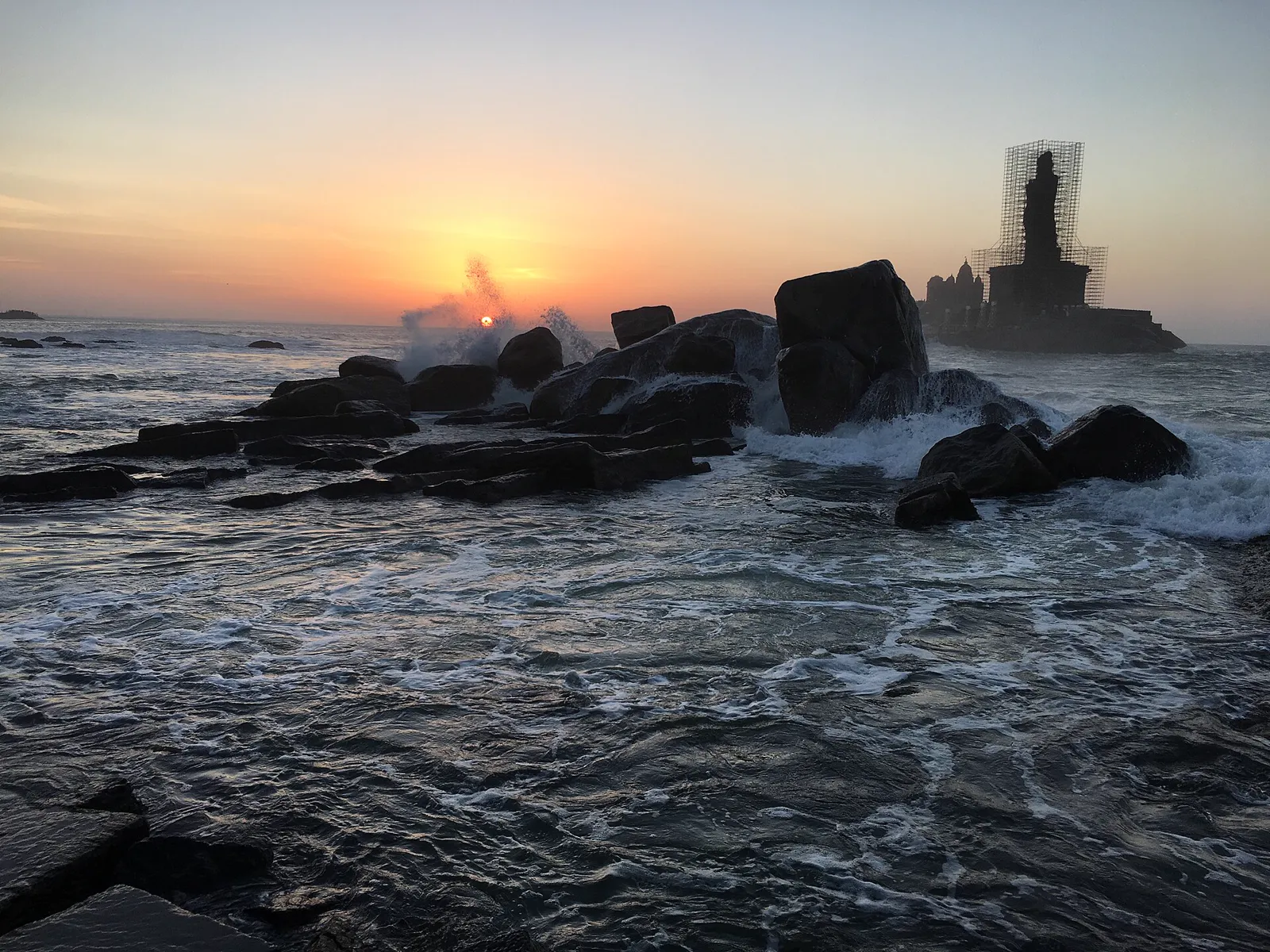
Month-by-Month Weather & Tourism Matrix
| Month | Avg Temp (°C) | Weather Condition | Tourism Season | Best For |
|---|---|---|---|---|
| October | 24°C – 30°C | Mild with occasional showers | Shoulder Season | Navaratri celebrations, green landscapes |
| November | 23°C – 29°C | Pleasant, post-monsoon breeze | High Season | Migratory birds at Manakudy, temple visits |
| December | 22°C – 29°C | Crisp, sunny, gentle winds | Peak Season | Suchindram Car Festival, Kottar Feast, Glass Bridge (Dec Guide) |
| January | 22°C – 29°C | Pleasant, sunny, clear skies | Peak Season | Pongal harvest festivals, beach walks |
| February | 23°C – 31°C | Warm days, cool evenings | High Season | Mandaikadu Masi Kodai festival, sightseeing |
| March | 25°C – 33°C | Warm, dry, sunny | Shoulder Season | Palace tours, photography before summer |
| April | 26°C – 35°C | Warm & humid | Summer Season | Chaitra Pournami full moon (dual sunset/moonrise) |
| May | 27°C – 35°C | Hot, coastal sea breeze | Summer Holidays | School vacations, evening beach relaxation |
| June – August | 24°C – 30°C | Southwest Monsoon rains | Monsoon Season | Thirparappu waterfalls in full surge, lush Ghats (Monsoon Guide) |
| September | 24°C – 31°C | Intermittent rains & sun | Post-Monsoon | Budget travel, uncrowded monuments |
1. Winter Season (October to March) — Peak Sightseeing & Festivals
This is the golden window for tourists. The humidity drops, daytime sun is gentle, and evenings along the coastline are refreshed by cool onshore winds. It is the best period for:
- Crossing the newly opened Curved Glass Sea Bridge between the twin ocean rocks.
- Touring the 16th-century wooden Padmanabhapuram Palace and walking the ramparts of Vattakottai Fort.
- Attending grand annual chariot processions at Suchindram and Kottar Cathedral.
2. Monsoon Season (June to November) — Waterfalls & Eco-Tourism
Kanyakumari District is geographically blessed to receive dual monsoons: the Southwest Monsoon (June–August) and the Northeast Monsoon (October–November). During these months, the district transforms into a lush green haven. It is the ideal time for:
- Witnessing the roaring 50-foot cascades of Thirparappu Falls.
- Trekking through the misty rainforests to Ulakkai Aruvi Waterfalls.
- Scenic mountain drives through rubber estates around Pechiparai Dam.
3. Summer Season (April & May) — Chaitra Pournami & Evening Breezes
While midday can be warm and humid, summers in Kanyakumari are made enjoyable by the continuous sea breezes. The standout highlight of summer is Chaitra Pournami (April/May full moon), when thousands gather along the Cape to watch the red sun sink into the Arabian Sea while a golden full moon rises simultaneously from the Bay of Bengal on the exact same horizontal plane.
4. Seasonal Comparison: Winter vs. Monsoon vs. Summer
| Season | Months | Day/Night Temp | Key Pros | Key Cons |
|---|---|---|---|---|
| Winter (Peak) | Oct to March | 28°C / 23°C | Pleasant breezy climate, calm seas, clear sunrises, grand temple car festivals. | Peak tourist crowds, higher hotel tariffs, ferry queues. |
| Monsoon (Green) | June to Nov | 29°C / 24°C | Roaring waterfalls, emerald rainforests, low hotel tariffs, budget-friendly. | Intermittent rain showers, rougher sea conditions on storm days. |
| Summer (Breezy) | April to May | 34°C / 26°C | Chaitra Pournami simultaneous sunset/moonrise, uncrowded monuments, sea breezes. | Warm midday sun and humid afternoons. |
5. Local Expert Advice for Choosing Your Travel Window
If your primary goal is cultural sightseeing, visiting monuments, and walking across the new Curved Glass Sea Bridge, choose December or January. If you love lush rainforests, river bathing under waterfalls, and dramatic misty mountain drives, plan your trip during the monsoon months of July through October.
6. The Chaitra Pournami Full Moon Phenomenon
One of the world's rarest celestial spectacles occurs in Kanyakumari on the full moon evening of Chaitra Pournami (in April or May). Because Kanyakumari is surrounded by water on three sides with a completely flat ocean horizon, spectators standing at the Cape shoreline can gaze west to watch the glowing fiery red sun set directly into the Arabian Sea while simultaneously turning their gaze east to watch the silver full moon rise from the Bay of Bengal at the exact same moment on the same horizontal plane.
7. Monsoon Photography & Green Tourism
For landscape photographers and nature lovers, the monsoon months (June to September) offer unmatched beauty. The dramatic storm clouds rolling over the Western Ghats, the roaring full-volume waterfalls at Thirparappu and Ulakkai Aruvi, and the emerald green paddy fields of Thovalai create a painterly paradise with zero tourist crowding.
8. Packing Tips for Each Season
For winter travel (Oct–March), pack light cottons, sunglasses, and a light jacket for breezy 6:00 AM sunrises. For monsoon visits (June–Nov), bring sturdy rain gear and water-resistant footwear for waterfall treks. For summer (April–May), light linen clothes and sun hats are essential.
Seasonal Treats in Vadasery, Nagercoil
No matter which month you visit, stopping at RajaGopal Sweet Stall on Asambu Road, Vadasery is the quintessential local tradition. Savor fresh 4 PM onion cashew pakoda, crispy Nendran banana chips, and authentic South Indian ghee sweets made fresh 365 days a year.
Call RajaGopal Sweet Stall Order on WhatsApp