Architectural Summary: The Timber Fortress
Constructed around 1601 CE by Iravi Varma Kulasekhara Perumal and vastly expanded in 1750 CE by the legendary King Anizham Thirunal Marthanda Varma, Padmanabhapuram Palace at Thuckalay stands as Asia's premier example of classical Thachushasthra (indigenous Kerala carpentry and timber architecture). Spanning 6.5 acres within a 4-kilometer granite fortress, this multi-level palace was constructed almost entirely from rosewood, teak, jackfruit, and anjili wood—engineered without a single iron nail or modern binder.
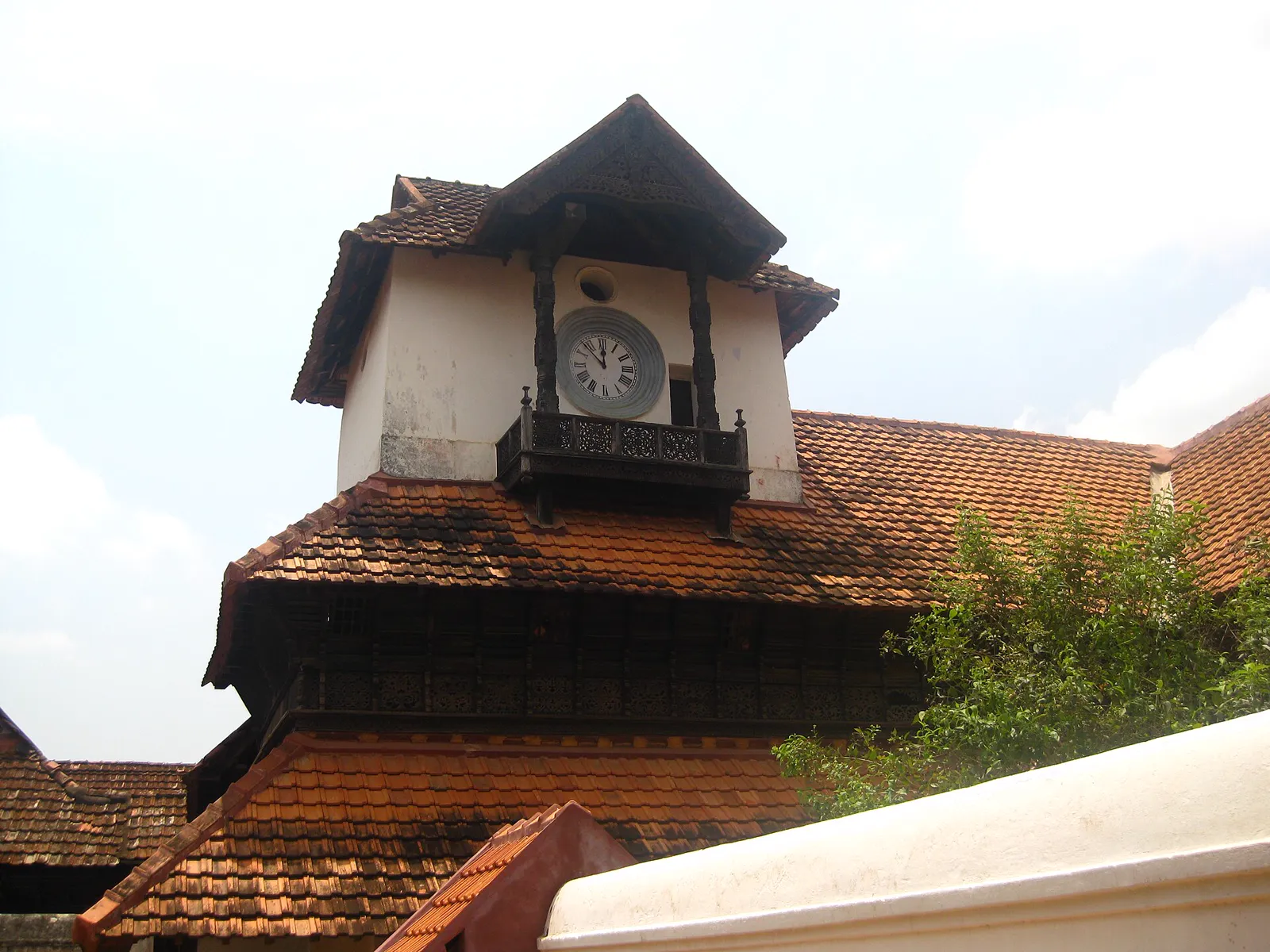
1. Thachushasthra: The Science of Nail-Less Timber Joinery
The structural framework of Padmanabhapuram Palace adheres to the principles of Thachushasthra, an ancient Vedic treatise governing woodcraft, orientation, and structural ergonomics. What makes this palace an engineering marvel is the total absence of iron nails:
- Mortise-and-Tenon Interlocking: Giant structural columns, load-bearing crossbeams, and steep gabled rafters are locked together using hand-carved wooden pegs called Marayanikal. These joints allow the wooden members to breathe, expand, and contract with fluctuating monsoon moisture without cracking.
- Steep Sloped Clay-Tiled Roofs: Triple-tiered overhanging eaves protect timber verandas from torrential tropical rains, while angled wooden louvers (*Jali* screens) ensure continuous passive cross-ventilation, cooling the palace naturally.
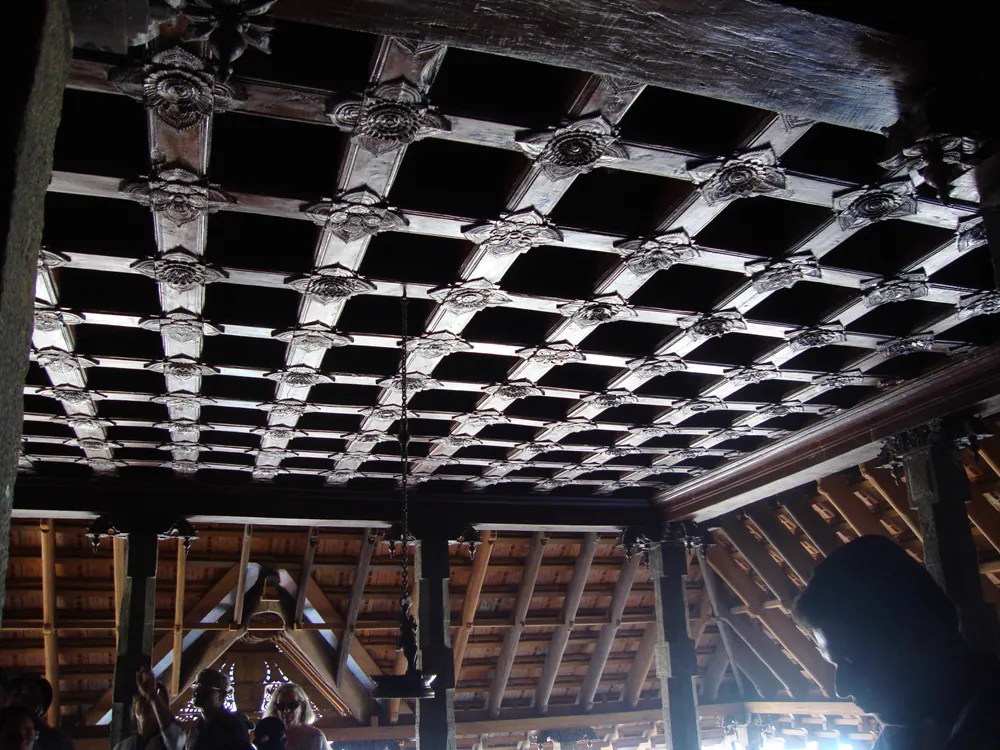
- Carved Rosewood Ceilings: The King's council chamber (*Mantrasala*) features 90 distinct floral panels carved from single rosewood blocks, each depicting unique lotus motifs and miniature dragon heads that demonstrate early Chinese trade influence.
2. The Mirror-Black Floor: An Organic Chemical Secret
One of the palace's most famous features is its glistening, dark-as-obsidian floor inside the council hall. When sunlight strikes the surface, it reflects like a polished granite mirror. Yet it is made entirely of organic, non-toxic materials:
The Traditional Black Floor Mortar Formula:
- Burnt coconut shell charcoal & river sand (for color and binder)
- Lime plaster tempered with tender coconut water
- Egg whites and boiled buffalo milk (providing high gloss and flexibility)
- Extracts of local astringent herbs, gallnuts (*Kadukkai*), and resin
Even today, walking barefoot on this floor feels noticeably cooler than the ambient air outside, illustrating the Travancore builders' mastery of natural climate conditioning.
3. Upparikka Malika & The 64-Medicinal-Wood Royal Bed
The tallest complex within the palace is the four-story Upparikka Malika (King's Quarters). On the second floor sits the King's personal bedchamber, housing one of the rarest antique beds in the world:
- 64 Ayurvedic Woods: Carved from 64 distinct medicinal tree barks, roots, and heartwoods—including sandalwood, red cedar, neem, vetiver roots, and black plum—the bed was engineered to release therapeutic oils and fragrances that naturally deter insects and induce calm sleep.
- Symbolic Dutch Carvings: Featuring carved eagles, European cherubs, and Hindu iconography, the bed was presented by Dutch naval physicians to King Marthanda Varma after the 1741 Battle of Colachel.
- The Sacred Puja Chamber: The top floor of Upparikka Malika houses the king's private shrine, adorned with 18th-century vegetable-dye murals illustrating scenes from the Ramayana, Bhagavatam, and Travancore court ceremonies.
4. The Mani Koodu Clock Tower & Secret Escape Tunnels
At the center of the palace courtyard rises the Mani Koodu (Bell House), a 300-year-old mechanical weight-driven clock installed during the reign of King Rama Varma. Built with heavy brass gears and counterweights, it continues to strike on the hour with a deep, resonant chime that carries across Thuckalay town.
Behind the king's bedchamber lies a hidden subterranean doorway. Legend recounts that this secret escape tunnel connected Padmanabhapuram Palace directly to the coastal bastion of Charode and Vattakottai Fort over 15 kilometers away, allowing royal commanders to evacuate during sudden sieges.
5. Architectural Comparison: Padmanabhapuram vs Contemporary Palaces
| Feature | Padmanabhapuram Palace (Travancore) | Thirumalai Nayakkar Mahal (Madurai) | Mattancherry Palace (Kochi) |
|---|---|---|---|
| Primary Material | Rosewood, Teak, Jackfruit timber | Granite, Brick masonry, Stucco | Laterite stone & wood |
| Architectural Style | Pure indigenous Thachushasthra | Indo-Saracenic & Dravidian | Kerala-Portuguese fusion |
| Nail Usage | Zero iron nails (wooden dowels) | Iron reinforcement & lime mortar | Timber joinery with iron ties |
| Flooring Chemistry | Burnt coconut charcoal & herbal mix | Polished granite & terracotta tiles | Plantain leaf & egg-white mortar |
Palace Tour Pitstop: Pure Cow Ghee Wheat Halwa
Padmanabhapuram Palace is located just 15 km (20 minutes) from RajaGopal Sweet Stall on Asambu Road, Vadasery. On your way back to Nagercoil, stop by to experience our decadent, slow-stirred Red Wheat Halwa dripping with pure cow ghee and roasted cashew nuts.
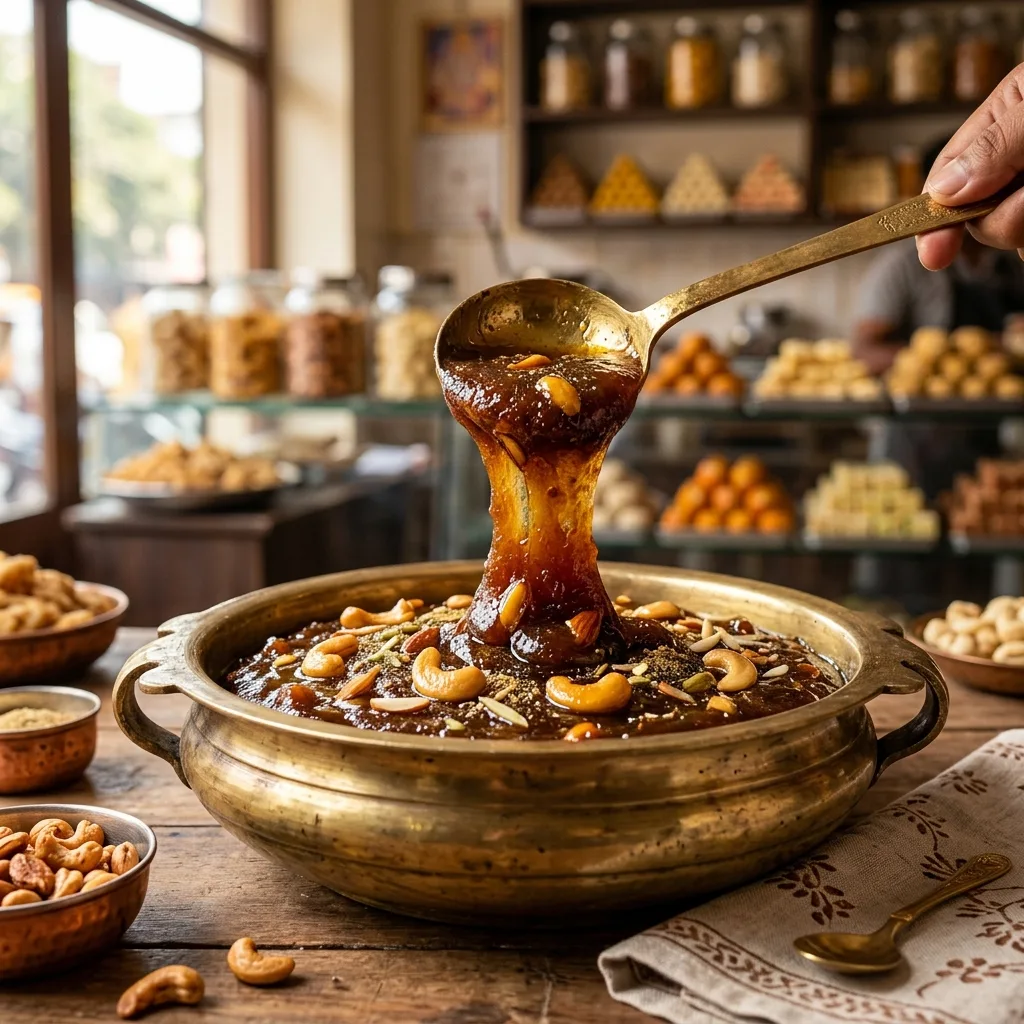 Cooked in heavy brass urulis daily
Visiting Logistics for Architecture Enthusiasts
- Timings: 9:00 AM to 4:30 PM (Tuesday to Sunday). Closed on Mondays and major government holidays.
- Entry Tickets: ₹40 for adults, ₹10 for children, and ₹300 for foreign visitors. A nominal ₹50 camera ticket applies.
- Footwear Protocol: Shoes and sandals must be checked at the cloakroom before entering the palace grounds to protect the fragile black herbal floors. Wearing comfortable socks is recommended.
- How to Reach: Located in Thuckalay, 15 km northwest of Nagercoil and 37 km from Kanyakumari on the NH 66 highway. Frequent buses and pre-booked cabs operate from Nagercoil Central Bus Stand and Railway Station.